Accessibility Tools

Select your language

UN Updates

Our strategic presence in Geneva sets us apart as the sole NGO exclusively committed to economic, social, cultural, and environmental rights. This permits us to play a pivotal role in promoting and protecting these rights globally.
Joint Statement on Human Rights for All Post-2015
Featured

Joint Statement on Human Rights for All Post-2015

Call for endorsements: Joint Statement on Human Rights for All Post-2015


The time is now to amplify our voice to ensure human rights are made real in the post-2015 sustainable development framework to succeed the MDGs! We are making headway, but the next few months before the September 2014 UN General Assembly will determine whether governments heed this call, or instead found the 21st century sustainable development framework on 'bracketed rights’ and broken promises.

In advance of the 6th Session of the Open Working Group on Sustainable Development Goals, a group of 70 governments charged with developing the SDGs, civil society organizations worldwide participating in an informal post-2015 human rights caucus have developed a joint statement (below) to urge governments to move beyond rhetoric and effectively align the post-2015 sustainable development framework with human rights norms.

We call on you endorse this joint statement by Tuesday, 10th December by indicating your organization’s full name, acronym and country by clicking here.  Please also send your logo if you have one to This email address is being protected from spambots. You need JavaScript enabled to view it..

Your support is crucial to ensuring human rights form the core of all aspects of the next global sustainable development agenda.

A special thank you to the Center for Economic and Social Rights for its leadership on this important initiative!

*  *  *

Human Rights for All Post-2015

December 2013

Human rights have surged to the forefront of the debate about what will succeed the Millennium Development Goals in 2015. As human rights and social justice organizations worldwide, we feel compelled to lay out some of the baseline implications of embedding human rights into the core of the sustainable development agenda this time around.

At its essence, a post-2015 framework anchored in human rights moves from a model of charity to one of justice, based on the inherent dignity of people as human rights-holders, domestic governments as primary duty-bearers, and all development actors sharing common but differentiated responsibilities. Accordingly, the post-2015 framework should be designed as a tool to empower and enable people—individually and collectively—to monitor and hold their governments, other governments, businesses, international institutions and other development actors to account for their conduct as it affects people’s lives within and beyond borders. A sustainable development framework founded in human rights can serve as an instrument for people and countries to help unseat the structural obstacles to sustainable, inclusive and just development, prevent conflict and stimulate implementation and enforcement of all human rights—civil, political, economic, social and cultural rights, the right to development,  and to a healthy environment.

The post-2015 framework must then at the very least respect and reflect pre-existing human rights legal norms, standards and political commitments to which governments have already voluntarily agreed. International human rights, environmental and humanitarian law, the Millennium Declaration, as well as related international consensus documents agreed in Rio, Vienna, Cairo, Beijing, Monterrey and Copenhagen and their follow-up agreements must form its non-negotiable normative base.

If it is going to incentivize progress while also preventing backsliding and violations, human rights principles and standards must go beyond the rhetorical, and have real operational significance this time around. Among other things, anchoring the post-2015 agenda in human rights for current and future generations implies that the framework:

1.      Upholds all human rights for all. The framework should stimulate improved human rights process and outcomes for all people, especially the most vulnerable, in all countries global North and global South. Along with economic, social, cultural and environmental rights, any successor framework must include commitments to protect freedom of association, expression, assembly and political participation if it is to ensure an enabling environment for an empowered civil society, and protect human rights defenders, including women human rights defenders, as central agents translating international political commitments into lived realities.

2.      Stimulates transparency and genuine participation in decision-making at all levels, throughout all policies including budget, financial, and tax policies. Access to information and meaningful and effective participation are not only fundamental human rights, but will also be critical to developing, implementing, and monitoring an effective and responsive post-2015 framework.

      3.      Integrates meaningful institutions and systems to ensure human rights accountability of all development actors. Lofty aspirations for a post-2015 agenda will surely fail if proper citizen-led systems of monitoring and human rights accountability are not built into the very DNA of the framework, with clear and time-bound commitments of all relevant actors. While states must remain the primary duty-holder in development, all development actors, including third-party states, the private sector and international financial institutions should be made responsive and accountable for achieving and not undermining global goals. Integrating substantive human rights criteria into assessments of progress towards development goals and commitments means monitoring both the policy and budgetary efforts of governments alongside development outcomes. Any post-2015 monitoring mechanism should complement and reinforce the findings of the Universal Periodic Review process for all states.  A framework for ensuring accountability would benefit from constructive interaction with the existing human rights protection regime, as well as other relevant accountability mechanisms. In this context, we call for an accountability framework with binding commitments, supported by effective monitoring and enforcement mechanisms, to be agreed at the global level. This framework should reaffirm the spirit of the 1986 Declaration on the Right to Development and it should be based on three fundamental principles: mutual accountability (donors and partners are equally accountable for development progress); democratic ownership of partner countries (alignment of donor countries to policy objectives set by developing countries, through inclusive and democratic processes); and inclusive partnerships (participation of different varieties of development stakeholders, State and non-State actors).

      4.      National mechanisms of accountability, such as judiciaries, parliaments, national human rights institutions, reinforced by regional and international human rights mechanisms such as the treaty bodies and the Universal Periodic Review mechanism, can help ensure the implementation of the post-2015 commitments. Likewise, the post-2015 development agenda is well-placed to encourage governments to improve access to justice for people living currently in poverty by monitoring measures to eradicate existing barriers.

5.      Ensures that the private sector, at the very least, does no harm. The post-2015 framework must reflect current international consensus that governments have a duty to protect human rights through the proper oversight and regulation of private actors, especially of business and private financial actors, to guarantee in practice that they respect human rights and the environment, including in their cross-border activities. At the very least, no governments should allow their territory to be used for illegal or criminal activities elsewhere, such as tax evasion, depositing assets obtained through corruption, environmental crimes or involvement in human rights violations, no matter the perpetrator.

      6.      Eliminates all forms of discrimination and diminishes inequalities, including socioeconomic inequalities. Human rights can only be realised within socio-economic and environmental boundaries if we also reduce inequalities of wealth, power and resources. Governments have a particular obligation under human rights law to protect the rights of the most marginalized and excluded, and to take additional measures to ensure that they enjoy their rights on an equal basis with others. Protecting decent work, and diminishing unfair wage disparities is also fundamental to reducing socio-economic inequality, as is reforming tax and fiscal policy and promoting human rights alternatives to austerity nationally and globally to unleash the resources necessary to finance human rights fulfillment. The timely collection and disaggregation of data on the basis of various grounds of compound discrimination is essential to identify, make visible and respond to inequalities and violations of human rights and to increase accountability. At a national level, data should be collected and disaggregated based on country-relevant factors as defined by rights-holders.

      7.      Specifically and comprehensively supports women's rights. Addressing gender-based violence, guaranteeing sexual and reproductive rights, ensuring women’s rights to and control over land, property and productive resources and their economic independence, recognizing the care economy and ensuring women’s rights to social protection and the equal distribution of paid and unpaid work, and their rights to participation in decision-making are critical, not only to realize women's human rights and achieve gender equality, but for enabling women’s full and active participation in economic, political and social life.

      8.      Enable the currently disadvantaged and commonly discriminated against and excluded groups to be effective agents of their own development by drawing on the provisions of human rights standards aimed at eliminating discrimination on grounds such as race, disability, migrant or indigenous status, age, sexual orientation, gender identity, etc.

      9.      Upholds the legal obligation to fulfill the minimum essential levels of economic, social, and cultural rights, without retrogression, which would imply a focus on “getting to zero” through the provision of social protection floors, universal health coverage, food security, and other floors below which no one anywhere will be allowed to live.

     10.     Tackles structural drivers of inequality, poverty and ecological devastation at the global level. A genuine and balanced global partnership then would enable people and institutions to monitor the common but differentiated responsibilities of all actors to prohibit rather than perpetuate these global obstacles. To be good-faith partners then, governments, business and international institutions must assess the impact of their policies and agreements (e.g. corporate accountability, environment, trade, investment, aid, tax, migration, intellectual property, debt, weapons trade and military cooperation, monetary, financial regulation) on human rights outside of their borders. Existing human rights norms can provide a common set of standards and useful yardstick to assess policy coherence for sustainable development.

At a time of great uncertainty, multiple crises and increasing insecurity and conflict, let us not found the 21st century sustainable development framework on 'bracketed rights’ and broken promises, but instead on a bold reaffirmation of human rights for all.


[END]
African Commission Affirms Women's Right to Land
Featured

African Commission Affirms Women's Right to Land

African Commission Affirms Women's Right to Land and Other Productive Resources


In November 2013, the African Commission on Human and Peoples' Rights adopted a groundbreaking resolution on women's right to land and other productive resources. With this resolution, the African Commission urged States "to fully comply with their obligations and commitments to ensure, protect and promote women’s right to land and property" and encouraged them "to repeal discriminatory laws and adopt legislative measures to sanction customary practices that limit or have a negative impact on women’s access to, use of and control over land and other productive resources." 

The Commission also called on States "to organise sustained public sensitisation, information and education campaigns for community and religious leaders in order to transform socio-cultural patterns of conduct that deprive women of their security of enjoyment of and equal access to property, land and adequate housing" as well as "to undertake land and agrarian reforms to ensure equal treatment for women in rural development, land distribution and social housing projects." The resolution further urged States to:

i) provide legal protection to women against forced evictions and dispossession of land for use by public and private actors;

ii) ensure widows’ right to inheritance, including the right to inherit the movable and immovable property of their husbands, as well as their right, irrespective of the matrimonial regime, to continue to live in the matrimonial house;

iii) ensure access to public justice services for underprivileged women by providing effective remedies for violations of their right to land and property, and free legal assistance in order to ensure compensation and the restitution of land;

iv) ensure that financial and microcredit institutions integrate the specific needs of women into their policies and practices, including access to credit and income-generating activities, especially for poor women and women heads of households;

v) integrate into national HIV/AIDS control strategies, as well as farming and land policies, women’s right to land and property;

vi) put in place special measures to protect the property rights of women with disabilities; and

vii) allocate specific resources to investment programmes that support and strengthen initiatives by rural women, in particular small-scale farmers.

Mayra Gomez, Co-Executive Director of the Global Initiative for Economic, Social and Cultural Rights, noted that "The Global Initiative has worked with its partners in a concerted effort to achieve this goal and we are quite happy with this result.  The challenge now, however, is for all of us to use this resolution in our advocacy for women's substantive equality in Africa and elsewhere, as well as to continually highlight the important link between human rights and access to, control over and use of land generally."  She added that "The Global Initiative worked closely with Initiative for Gender Equality in Development - Africa, ActionAid - Burundi, FIDA - Kenya, and others to make this resolution a reality."

With the adoption of this resolution, women's right to land and other productive resources has clearly been established as a component of both the African Charter on Human and Peoples’ Rights and the Protocol to the African Charter on Human and Peoples’ Rights on the Rights of Women in Africa (Maputo Protocol).  The Commission also made clear that "women’s access to, control over and use of land and productive resources contribute[s] to promoting gender equality and constitute[s] a solid basis for improving women’s social, political and economic status."


The full resolution can be accessed HERE.

Realizing women's rights to land and other productive resources
Featured

Realizing women's rights to land and other productive resources

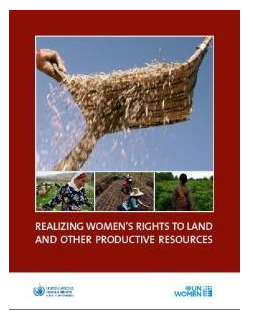
New Handbook: Realizing women's rights to land and other productive resources


Authors/Editor(s):

 UN Women and OHCHR


Women’s access to, use of and control over land and other productive resources are essential to ensuring their right to equality and to an adequate standard of living. Throughout the world, gender inequality when it comes to land and other productive resources is related to women’s poverty and exclusion.  Barriers which prevent women’s access to, use of and control over land and other productive resources often include inadequate legal standards and/or ineffective implementation at national and local levels, as well as discriminatory cultural attitudes and practices at the institutional and community level.

The purpose of this publication is to provide detailed guidance to support the adoption and effective implementation of laws, policies and programmes to respect, protect and fulfil women’s rights to land and other productive resources.  It presents an overview of international and regional legal and policy instruments recognizing women’s rights to land and other productive resources, and discusses ways of advancing a human rights-based approach to women’s rights to land and other productive resources.  It sets out recommendations in a range of areas accompanied by explanatory commentaries and good practice examples and case studies from countries. The publication is based on the results of an expert group meeting held in June 2012.  It is hoped that the publication will be a useful tool for policy makers, civil society organizations and other stakeholders  in their efforts to realize women’s rights to land other productive resources.

"UN Women and OHCHR especially wish to thank Mayra Gómez [Co-Executive Director of the Global Initiative for Economic, Social and Cultural Rights], the Rapporteur and consultant who had primary responsibility for developing and finalizing this publication."

View Online:

PDF version: English - See more at: http://www.unwomen.org/en/digital-library/publications/2013/11/realizing-womens-right-to-land#sthash.3Ne8bSQx.dpuf

Human rights beyond borders: The Maastricht Principles
Featured

Human rights beyond borders: The Maastricht Principles

Human rights beyond borders: UN experts call on world governments to be guided by the Maastricht Principles


UN Special Procedures Joint Press Release: Human rights beyond borders: UN experts call on world governments to be guided by the Maastricht Principles

GENEVA (26 September 2013) – A group of United Nations human rights experts today urged governments worldwide to take into account a set of guidelines on extraterritorial obligations adopted by leading specialists in international law and human rights on 28 September 2011 in Maastricht, the Netherlands: the Maastricht Principles*.

“By nature, some of the world’s most pressing issues spill over national boundaries,” the UN experts said, while highlighting the importance of the Maastricht Principles as a key tool in addressing complex contemporary crossborder human rights challenges, including global poverty, hunger and food security, and access to water.

“The Maastricht Principles clarify the human rights obligations of States beyond their own borders, especially their obligation to avoid causing harm and to protect human rights extraterritorially,” the UN experts on extreme poverty, food, water and sanitation, and international solidarity explained.

When making policy and deciding on new laws, they said, States must consider their impact on the enjoyment of human rights of people outside their own country. “The protection and promotion of human rights beyond borders must be elevated to the heart of States’ national and international decision-making,” the experts stressed.

“28 September 2011 was a significant moment in the development of international human rights law,” they noted. “The Maastricht Principles filled a critical gap in the international legal framework, allowing human rights to effectively respond to the negative impacts of globalisation that cannot be regulated by one State alone.”

Extreme poverty

“Holding States to account for their extraterritorial obligations is fundamental to our ability to fight extreme poverty globally,” said the UN Special Rapporteur on extreme poverty and human rights, Magdalena Sepúlveda. “These obligations were also recognised in the UN Guiding Principles on Extreme Poverty and Human Rights, in acknowledgement of the specific obstacles people in poverty face.”

“In particular,” she noted, “the extraterritorial obligations framework offers an important basis for States to work collectively to tackle the structural and systemic dimensions that underlie and perpetuate extreme poverty and global inequality.”

Right to food

“The full realization of the right to food depends on national efforts, but also on an international environment that supports such efforts by enabling countries to put in place and implement effective national food security strategies,” the UN Special Rapporteur on the right to food, Olivier De Schutter, said. “The Maastricht Principles make it clear that shaping such an international environment is not a matter of goodwill: it is a legal obligation grounded in international law.”

“Moving towards the right to food depends on the promise of Article 28 of the Universal Declaration of Human Rights being fully implemented,” he said. “This provision guarantees to each individual an international social order in which human rights can be fully realized. It calls for trade, investment and development cooperation policies to be aligned with the requirements of human rights.”

Water and sanitation

“Sixty percent of global freshwater flow is transboundary. More than 80 percent of all wastewater generated worldwide is not treated,” noted the Special Rapporteur on the human right to safe drinking water and sanitation, Catarina de Albuquerque. “This means we must address extraterritorial issues to ensure the human rights to water and sanitation.”

“The Maastricht Principles underscore the States’ obligation to avoid causing harm extraterritorially and to protect human rights extraterritorially,” she said. “This translates into an obligation to avoid contamination of watercourses in other jurisdictions and to regulate non-State actors accordingly.”

International solidarity

“International solidarity requires that States —as a minimum— should respect the exercise and enjoyment of human rights in other countries, and refrain from actions with adverse extraterritorial consequences,” the UN Independent Expert on human rights and international solidarity, Virginia Dandan, stressed.

“In particular, Principles 26 to 35 of the Maastricht Principles clearly spell out the conduct of States in their relations with each other taking into account their shared human rights obligations,” she said.

(*) Check the Maastricht Principles:

http://www.maastrichtuniversity.nl/web/Institutes/MaastrichtCentreForHumanRights/MaastrichtETOPrinciples.htm

On 28 September 2011, a group of experts in international law and human rights adopted the Maastricht Principles on Extraterritorial Obligations of States in the area of Economic, Social and Cultural Rights, at a meeting organized by Maastricht University and the International Commission of Jurists. The experts came from organizations and universities from all regions of the world, and included current and former members of international human rights treaty bodies, regional human rights bodies, and former and current Special Rapporteurs of the United Nations Human Rights Council.


You don't have a pdf plugin, but you can download the pdf file.


Recognize the human rights dimensions of women’s access to land
Featured

Recognize the human rights dimensions of women’s access to land

GI-ESCR urges the CEDAW Committee to recognize the human rights dimensions of women’s access to land


Global Initiative for Economic, Social and Cultural Rights urges the CEDAW Committee to recognize the human rights dimensions of women’s access to land and other productive resources  

The Committee on the Elimination of Discrimination against Women today convened a Day of General Discussion on rural women as the next step towards a General Recommendation on Article 14 of CEDAW on the rights of rural women. The Global Initiative for Economic, Social and Cultural Rights was invited to prepare a background paper for the Committee and Mayra Gómez, Co-Executive Director of the GI-ESCR, participated as a keynote speaker.

In her presentation, Dr. Gómez highlighted that land is a critical issue for rural women and that in many cases the issue of land itself is a prism through which structural patterns of gender inequality can be revealed and eradicated.

The Committee also heard how the livelihoods and welfare of rural women is inextricably linked to their secure rights to land and that rural women’s secure rights to land is a precondition for their ability to enjoy many of the other rights enshrined in the CEDAW and other international human rights treaties.

Dr. Gómez offered concrete recommendations to the Committee, including:

  • Continuing to develop the normative framework for women’s secure rights to land, particularly by clarify the obligations of States through its General Recommendations, Concluding Observations as well as cases considered under the Optional Protocol;

  • Continuing to encourage States to reform discriminatory national laws which may negatively impact rural women’s ability to enjoy secure rights to land;

  • Highlighting the extra-legal obstacles to substantive equality and propose strategies for tackling these obstacles.

Finally, recommendations towards the implementation of land rights of women were made to States, including:

  • Develop a comprehensive strategy to address negative customs and traditional practices which affect full enjoyment of secure land rights by women, including where appropriate, through temporary special measures to accelerate the advancement of these rights;

  • To raise awareness about secure rights to land for women and women’s perspectives amongst traditional, religious and customary leaders, law makers, lawyers and advocates, the judiciary, law enforcement authorities, housing authorities and administrators, gender ministries, and those engaged in the development or implementation of land policy or land reform;

  • Ensure access to legal and support services for women wishing to understand and enforce their rights, and that concrete remedies are available for rights violations;

  • Invest in targeted information dissemination and capacity building programs so that women can claim their rights and involve themselves in community fora and discussions with land administration authorities.

The GI-ESCR also facilitated the participation of its partners Landesa and GROOTS Kenya and made a joint NGO intervention before the Committee along with International Land Coalition, Landesa, Action Aid, Huairou Commission, International Accountability Project and International Center for Research on Women which also addressed the issue of women's rights to land and other productive resources.


The GI-ESCR Background Paper can be seen HERE.

Dr. Gomez’s Key Note Presentation can be seen HERE.

The Joint NGO statement can be seen HERE.


You don't have a pdf plugin, but you can download the pdf file.

World Bank must uphold human rights in all activities they support
Featured

World Bank must uphold human rights in all activities they support

World Bank and other International Financial Institutions must uphold human rights in all activities they support


Joint Statement to the UN Human Rights Council: The World Bank and other International Financial Institutions must uphold human rights in all activities they support

The decisions, policies and projects promoted by international financial institutions (IFIs) have significant and often far-reaching impacts on human rights. While the impacts of these institutions can be positive - for example, contributing to poverty reduction - too often the impact is negative, with poor and marginalised individuals and communities suffering the most negative impacts. This is because these institutions frequently invest in industries, such as energy and resource extraction and projects, such as large-scale infrastructure development, associated with environmental damage and human rights abuses, like forced evictions. Also the projects that they support are frequently carried out in countries that may face significant challenges in ensuring the effective protection of human rights.

The undersigned organizations urge the UN Human Rights Council to increase its focus on the human rights impact of IFIs, including multilateral development banks, such as the World Bank.

While the obligation for the protection of human rights lies with the state, IFIs and their member states also have responsibilities to ensure that activities they support do not cause, or contribute to, human rights abuses by putting in place adequate safeguards. Many IFIs regard human rights as a political issue for states, and refuse to accept that they have, at a minimum, a responsibility to ensure respect for human rights in the activities they support. This is despite the fact that many IFIs are established and controlled by states, which have legal obligations under international and regional (and, in many cases, national) law to respect, protect and fulfill human rights.

The UN Committee on Economic, Social and Cultural Rights, has consistently stated that the obligations of states that are parties to the International Covenant on Economic, Social and Cultural Rights (ICESCR) extend to state action as part of inter-governmental organizations, including international financial institutions. In fact under the UN Charter and other instruments such as the ICESCR, states have the obligation to act individually and jointly to respect and defend human rights, including through international cooperation and assistance.

IFIs are large and powerful organizations, and the harm that can result from their refusal to meet their human rights responsibilities can be significant. Support provided without taking into account or requiring adequate human rights protections can legitimise and foster violations by states and abuses by non-state actors. This is an issue that the UN Human  Rights Council must not continue to ignore.

All IFIs should implement human rights due diligence measures, including human rights impact assessments and human rights safeguard policies, which are consistent with international human rights laws and standards. Due diligence should inform not only project design, but also project implementation and evaluation. At the same time, IFIs and the activities they support should be carefully monitored to assess their ongoing impact on human rights, as well as the presence of effective procedures for ensuring accountability for human rights violations.

The impact of IFIs on human rights is a matter of global concern. In June 2012, during the Rio+20 Conference on Sustainable Development, twenty-one special procedures mandateholders stressed the need to ensure a unified accountability mechanism at the UN to monitor progress in achieving the sustainable development goals from a human rights viewpoint. Subsequently, in April 2013, four special procedures mandate-holders asked the World Bank to adopt human rights standards within the review of its Environmental and Social Safeguard Policies. Most recently, in June 2013, the Vienna+20 Conference on Human Rights called upon the UN and its stakeholders to address the responsibility of international intergovernmental organizations engaged in human rights violations.

Consequently, we are now urging the Human Rights Council to take concerted and expeditious action to elaborate and reinforce the human rights responsibilities of IFIs.  While the role of IFIs has been addressed, to a limited degree, in international documents such as the Millennium Declaration, the Declaration on the Right to Development and the Declaration on the Rights of Indigenous Peoples, greater focus and clarity is required to ensure that IFIs respect and protect human rights in their operations and are held accountable when they fail to do so.

Important work, which can contribute to clarifying the human rights responsibilities of the World Bank and other multilateral development banks, has already been completed. For instance, the 2011 UN International Law Commission’s “Draft Articles on Responsibility of International Organizations” confirms that intergovernmental organizations, such as IFIs, are subjects of international law, and as such they have international law obligations that they must comply with.  The Draft Articles also point out the international responsibility of both the organizations and the member states concerned.

In addition, the 2012 “Maastricht Principles on Extraterritorial Obligations of States in the area of Economic, Social and Cultural Rights” articulate the human rights obligations of states when acting jointly through an intergovernmental organization, as in the case of IFIs. These Principles have been endorsed by many international law experts, including current and former members of UN human rights treaty bodies, regional human rights bodies, and former and current special rapporteurs of the UN Human Rights Council.

It is important that the Human Rights Council’s authority be brought to bear on these issues.  The current global discourse around the post-2015 development goals offers an important opportunity to ensure that global governance and sustainable development increasingly incorporate a human rights law perspective. Post-2015 development goals must also take into account the human rights responsibilities of IFIs given their significant impact on development and potential for addressing poverty concerns.  Accordingly, we urge that a panel discussion on this issue be held at a future session of the Council. The focus of the panel should be the connection between IFIs activities and their responsibly to ensure that human rights are respected and protected, and the options available to states and to the Human Rights Council to address violations. The objective would be to facilitate constructive dialogue on these issues.

Moving Beyond Cold War Visions and Endtime Prophecies
Featured

Moving Beyond Cold War Visions and Endtime Prophecies

Moving Beyond Cold War Visions and Endtime Prophecies: Claiming All Human Rights for All (Once and For All)


The following is a response from the Global Initiative for Economic, Social and Cultural Rights to an ongoing debate, which began HERE and HERE, on the content of human rights and the efficacy of the human rights framework and human rights advocacy for achieving social justice.

Moving Beyond Cold War Visions and Endtime Prophecies: Claiming All Human Rights for All (Once and For All)

By Global Initiative for Economic, Social and Cultural Rights

The articles ‘Misunderstanding our mission,’ (by Aryeh Neier, founder of Human Rights Watch) and ‘Human rights: past their sell-by date,’ (by Stephen Hopgood) unfortunately mischaracterize and misunderstand both the nature and the power of the modern human rights movement.  Both articles, while taking very different views of the human rights movement, seem to align perfectly with respect to putting forward views about human rights which are outdated and which perpetuate myths about human rights, myths which have been discredited within the international community for decades now.

The article by Aryeh Neier equates the whole of the human rights framework with civil and political rights, setting forth a “series of limits on the exercise of [State] power” vis-à-vis, for example, freedom of expression, personal liberty and privacy.  He goes on to say that social justice advocacy, focuses on “distribution, or redistribution of wealth and resources;” a mission which may get at the roots of poverty but which he sees as falling outside of the scope of human rights.

We now have an overwhelming body of evidence that refutes this archaic and culturally biased notion of human rights, evidenced by successful legal enforcement of economic, social and cultural rights at the international, regional and national levels and such rights increasingly given Constitutional protection.

To be more specific, Neier’s outdated notion of human rights has at least two problems with it.  First, it draws an artificial line and pits civil and political rights (rights like freedom of expression, the right to life, and the right to a fair trial) against economic, social and cultural rights (rights like the right to the highest attainable standard of health, the right to adequate housing, and the right to water).  In Aryeh Neier’s view, one is either a human rights advocate, or a social justice advocate, but not both.  Second, it perpetuates the myth that civil and political rights are only about negative obligations (obligations which require the State to refrain from action, say, torture), while economic, social and cultural rights have only positive obligations (obligating the State to take action, say, to provide housing).  In reality, both sets of rights entail both negative an positive obligations.  For instance, the right to a fair trial would be meaningless without corresponding State expenditure to make the justice system functional and effective, and the right to water would be meaningless if States were allowed to cut off a community's water supply.

At times like this it’s important to recall that it was over 60 years ago now that the Universal Declaration of Human Rights was adopted, enshrining civil, cultural, economic, political and social rights as a comprehensive whole and side-by-side.  20 years ago, through the Vienna Declaration and Programme of Action, the international community reaffirmed that “All human rights are universal, indivisible and interdependent and interrelated. The international community must treat human rights globally in a fair and equal manner, on the same footing, and with the same emphasis.”  And, just last month, at Vienna +20, representatives of the global community once again reiterated “the importance of affording the same standard of protection to economic, social and cultural rights and to civil and political rights.”

In reality, the interconnection and interdependence of all human rights is readily apparent.  For example, one cannot effectively realize the right to participate in government without also effectively realizing the right to food or the right to education.  Similarly, the right to adequate housing is compromised if the right to equality before the law is not ensured.  One set of rights cannot be protected at the expense or ignorance of the others.  The fact that close to one billion persons live without inadequate housing, that over one billion persons lack access to clean water, that over 840 million persons are chronically hungry, and that there are more than 215 million child laborers throughout the world illustrates the human rights impact of economic, social, and cultural rights violations.  These are human rights issues and no human right can be seen as superfluous or unnecessary.

Stephen Hopgood, in his essay, correctly critiques these kinds of ideas as alienating and culturally biased.  But, he gets it wrong when he says that we live at the endtimes for universal human rights.  In fact, we are no where near the end.

As human rights advocates know, with human rights come obligations, and when those rights and obligations are violated, the victims are due remedies and the perpetrators should be held accountable.  This basic equation is part of the power of human rights and is one of the key strengths of the human rights framework as a means to achieve social justice.  While economic, social and cultural rights are enshrined in the most foundational human rights documents, this antiquated notion that such rights are not really rights apparently is still alive and well for some. In fact, in apparent defiance of the principles of interdependence and universality, some detractors continue to propagate the myth that economic, social and cultural rights are merely aspirational and are somehow not legally enforceable – in other words, not justiciable.

But a closer look at the reality shatters that myth.  As mentioned above, economic, social and cultural rights have been not only successfully adjudicated in domestic courts in countries in all parts of the world, they are part of many national Constitutions.  They are addressed as a matter of course in all the major regional human rights tribunals.  And UN judicial and quasi-judicial mechanisms such as the Human Rights Committee – which monitors the International Covenant on Civil and Political Rights – have taken on issues such as water and housing because the concept of ‘interdependent and interrelated’ is not just theoretical – there is no meaningful right to life without access to clean water, and there is no meaningful right to freedom from cruel and degrading treatment if one is forcibly evicted from their home.  The Human Rights Committee is also clear that civil and political rights also entail positive obligations, meaning that countries must not just refrain from certain actions, but must undertake certain actions to achieve certain results.  The body of jurisprudence which has been built over the past decade in this area is no longer an idea subject to debate; it is a reality.  These judicial advancements have built a solid foundation upon which economic, social and cultural rights judicial advocacy can be successfully undertaken, and upon which persons and communities can rely in order to enforce (all of) their human rights.  And, these advancements demonstrate the human rights framework and human rights advocacy, including social movements using this framework in their advocacy, can move us all closer to social justice.

To cite just one example, only a few years ago, in South Africa hundreds of poor families were to be forcibly evicted from their homes to make way for upscale urban development in Johannesburg.  While their housing was poor, and considered uninhabitable even by them, these families were to be forcibly displaced to the periphery of the city and thereby cut off from access to schools, health care facilities and livelihood opportunities.  Using the human rights framework, however, these families and their allies in the NGO sector ultimately held powerful authorities accountable to human rights standards, including the right to adequate housing.  At the end of the day, in 2008, the Constitutional Court of South Africa enforced their right to have human rights standards respected, protected and fulfilled, including not only the right to adequate housing, but also to benefit from development schemes and to participate meaningfully in all relevant decisions.  In other words, human rights did what they were designed to do – to equalize power dynamics between poor families facing forced eviction and governmental authorities, so that the families could be the architects of their own solutions.  Today, these families are living in improved housing near the same schools, health care facilities and the livelihood opportunities they came very near to losing. Participation, equality, inclusion and prioritization of the most marginalized are core human rights concepts.

This is what the future holds, and while there are many actors working in solidarity, and while it is healthy in any movement to have different points of view, there is still one human rights movement.  We aren’t going anywhere.  Without the human rights framework, these tools – rights with corresponding obligations set out in clearly articulated standards, accountability and remedies – would not be available to social justice movements of all kinds, in all parts of the world.  The truth is that we need human rights now more than ever.  While human rights advocates may not be able to take up the full spectrum of rights in all of our advocacy work, we must recognize and champion that spectrum, and we must recognize the interrelatedness of rights.

Please also see:

Response from the Center on Economic and Social Rights

Response from Margot Salomon

GI-ESCR welcomes Vienna + 20 Outcome Document
Featured

GI-ESCR welcomes Vienna + 20 Outcome Document

GI-ESCR welcomes Vienna + 20 Outcome Document recognition of Extra-Territorial Obligations


The Global Initiative for Economic, Social and Cultural Rights (GI-ESCR) welcomes the Outcome Document of the Vienna + 20 human rights conference, and in particular the recognition of the human rights obligations of inter-governmental organizations, which includes international financial institutions such as the World Bank and regional development banks, as well as the recognition of extra-territorial human rights obligations. The Vienna + 20 Outcome Document reflects the input of the Vienna + 20 Civil Society Organizations (CSO) Declaration, calling on governments to:

Ensure the accountability of those whose responsibility is engaged in connection with violations of human rights and international humanitarian law, in particular:

  • international governmental organisations (IGOs);

  • non-state actors, including transnational corporations (TNCs), private military and security companies and rebel groups;

  • intelligence agencies in relation to their worldwide surveillance practices,

  • also taking into consideration the extra-territorial obligations of States as reflected in the “Maastricht Principles”.

According to Bret Thiele, Co-Executive Director of the GI-ESCR, "This clear statement not only further reaffirms the human rights obligations of international financial institutions (IFIs), including the extra-territorial obligations of Member States of IFIs to respect, protect and fulfill human rights abroad, but also makes clear that such human rights norms, and indeed the entire body of human rights, must be at the core of the post-2015 development framework."

The full Vienna + 20 Outcome Document can be found HERE.

The Vienna + 20 CSO Declaration can be found HERE.


You don't have a pdf plugin, but you can download the pdf file.


You don't have a pdf plugin, but you can download the pdf file.


You don't have a pdf plugin, but you can download the pdf file.

GI-ESCR for ESCR welcomes Vienna + 20 CSO Declaration
Featured

GI-ESCR for ESCR welcomes Vienna + 20 CSO Declaration

GI-ESCR for ESCR welcomes Vienna + 20 CSO Declaration


The Global Initiative for Economic, Social and Cultural Rights (GI-ESCR) welcomes the Vienna + 20 Civil Society Organizations Declaration on the primacy of human rights.  Over 140 members of civil society came together on the 20th anniversary of the adoption of the Vienna Declaration and Programme of Action in order to move the human rights agenda forward.  At the end of the conference, they adopted the Vienna + 20 CSO Declaration. As FIAN rightly noted, "The Vienna+20 CSO Declaration stresses the primacy of human rights. Respect, protection and fulfilment of all human rights are the first responsibilities of states. Despite progress made in human rights protection, vested interests, in particular corporate interests, tend to prevail, even in multilateral fora and agreements. Especially economic, social and cultural rights still lack adequate forms of legal sanctions as compared to other legal regimes such as international commercial law."

The CSO Declaration reaffirms that human rights take primacy, including in global and national development and financial frameworks.  The Declaration addresses women's human rights, extra-territorial human rights obligations, the need for human rights to be at the core of the post-2015 development framework, environmental justice, food sovereignty, the need for legally binding human rights obligations of transnational corporations and other business enterprises, and the human rights of marginalized groups, among other issues.  The Declaration also calls for the establishment of a World Court of Human Rights as originally envisioned in the Vienna Declaration and Programme of Action of 1993.

CSO Representatives at Vienna + 20 CSO Conference

The Global Initiative for Economic, Social and Cultural Rights contributed in areas associated with its Strategic Priorities, namely women's human rights, extra-territorial obligations, and the post-2015 development framework.  According to Bret Thiele, Co-Executive Director of the GI-ESCR, "With the Vienna + 20 CSO Declaration, civil society has spoken clearly and with a concerted voice reaffirming the Vienna Declaration and Programme of Action, and reminded States that human rights must take primacy, including in the post-2015 development framework."  The Declaration was immediately sent to the State delegations at the Vienna + 20 conference.

The CSO Declaration will also guide and focus the work of the NGOs and CSOs at Vienna + 20 over the next several years and progress on implementing the Declaration will be monitored along the way.  The CSO Declaration called for a Third World Conference on Human Rights in 2018 where the results of implementing the Declaration will be considered.

The CSO Declaration also influenced the Vienna + 20 Outcome Document, including in the area of human rights obligations of international financial institutions including extra-territorial obligations of Member States of IFIs.

Read the full CSO Declaration HERE.


You don't have a pdf plugin, but you can download the pdf file.

NEWSLETTER

Don´t miss any updates!
Image

Select your language

Social Media:

Log in

Climate and Environmental Justice

We have advanced rights-based and gender-transformative transition frameworks through research that centres the lived experiences of women and marginalised communities on the frontlines of extractive energy policies, promoting climate and energy frameworks attentive to the social and care-related impacts of transition pathways. We have developed a clear vision for a gender-just transition, firmly rooted in gender and human rights norms, establishing both the legal basis and the direction for the transformative changes our planet and societies urgently need. In particular, the ‘Guiding Principles for Gender Equality and Human Rights in the Energy Transition’, a collective effort built through online consultations, an in-person workshop and multiple rounds of revision with activists, practitioners and experts from around the world, outline a transformative vision for reshaping global energy systems through a human rights and gender equality lens.

Our work recognises that the climate emergency is both an existential threat and an opportunity to reimagine societies built on social, gender, economic and environmental justice. We ground our advocacy in feminist and intersectional principles, prioritising the agency and perspectives of communities in the Global South who have contributed the least to the climate emergency yet face its most devastating consequences. Central to our approach is the understanding that energy is not merely a commodity but a fundamental human right; essential for dignity, health, education, work and the realisation of countless other rights. We challenge approaches to the energy transition that risk replicating the harmful patterns of fossil fuel extraction and, instead, advocate for transformative policies that ensure human rights and gender equality as central to building climate-resilient societies rooted in dignity, justice and planetary well-being.

What's next?

We will continue to challenge approaches that treat energy transition as merely a technical shift, instead positioning it as an opportunity to reimagine economies and societies rooted in dignity for all, with particular attention to communities in the Global South who have contributed least to the climate emergency yet are most exposed to its worst effects.

We will connect community-level evidence and the lived experiences of those on the frontlines of extractive policies to national reform and global norm-setting, breaking down silos between human rights, gender, and climate movements, and advancing a shared vision that recognises just transitions as not only fundamental to achieving climate-resilient and sustainable societies, but as transformative pathways that advance social and gender equality, redistribute power and resources equitably, and ensure that energy systems serve the public good rather than profit.

We will mainstream rights-based and genderjust transition priorities in key multilateral spaces (particularly, within the Just Transition Work Programme and the to-be-developed Just Transition Mechanism, within the UNFCCC) to guarantee that just transitions are advanced at all levels.

We will also translate our work, through strategic advocacy, into at least two concrete policy wins, whether promoted, adopted, implemented, or scaled, in priority countries (Argentina, Brazil, Chile, Mexico, Colombia, South Africa, or Kenya), ensuring these policies align with human rights standards, centre gender equality, and reflect the needs and views of affected communities.

We will build momentum for the progressive recognition of the right to sustainable energy to shift dominant narratives away from purely extractive solutions that sideline gendered impacts, community participation, and Global South perspectives.

Economic Justice and Climate Finance

Our work has transformed the global discussion on fiscal policy in a more just, emancipatory and sustainable direction. Our approach has combined both high-level, expert contributions within decisionmaking circles, with bold, impactful work on narrative change with the general public.

We have been instrumental in the inclusion of human rights as a guiding principle of the future United Nations Framework Convention on International Tax Cooperation, a multilateral instrument with the potential of raising approx. USD 492 billion per year in public revenues currently foregone to global tax abuse. In the process leading to the ‘Compromiso de Sevilla’ decided at FfD4, we proposed and succeeded in creating a specific human rights workstream within the Civil Society Financing for Development Mechanism, which was critical to ensure that explicit commitments on the matter were included in the negotiating outcome. In a context of cutbacks in multilateral institutions, we have amplified the capacities of technical experts, providing rigorous technical support and leveraging our influence to ensure the enactments of groundbreaking standard-setting instruments, such as the 2025 UN Committee on Economic, Social and Cultural Rights Statement on Fiscal Policy and Human Rights, and the first ex oficio hearing on the Inter-American Commission of Human Rights on Fiscal and Economic Policies to Address Poverty and Structural Inequality, leading to an upcoming thematic resolution on the matter. We have also bridged the silos between multilateral tax discussions and climate finance debates, promoting ambitious financing commitments to increase international and domestic resource mobilisation during COP 28, 29 and 30.

At the regional level, our engagement with fiscal cooperation platforms such as the Platform for Fiscal Cooperation of Latin America and the Caribbean (PTLAC), where we are member of its Civil Society Consultative Council, and the African Anti-IFFs Policy Tracker, for which we participated in the pilot mission in Ivory Coast together with Tax Justice Network Africa (TJNA), have been critical in cementing a growing engagement between tax administrations and ministries of finance with international legal experts, exploring actionable and transformative initiatives, such as the taxation of high-net-worth individuals, beneficial ownership registries and corporate countryby-country reports, to be implemented at the international level.

At the local level, our interventions in fiscal reform debates in Chile, Brazil, Colombia and Nigeria have contributed to shaping legislative outcomes in a more progressive, rights-compliant direction.

As for our leadership in narrative change, we have a measurable track record in delivering tailored, innovative campaigns which have decisively expanded economic justice constituencies by appealing to a broader tent. In Latin America and the Caribbean, we created the ‘Date Cuenta’ campaign, coordinating over 40 organisations across civil society to deliver plain language, innovative messaging connecting progressive fiscal reforms to the financing of health, education and social protection. ‘Date Cuenta’ generated over 55 original campaign messages that were tailored to the realities of seven priority countries (Argentina, Chile, Colombia, Mexico, Paraguay, Peru and Honduras) and disseminated in Spanish, Portuguese and English. In doing so, we convened more than 65 online co-creation workshops with partners, coordinating a unified communications strategy which combined digital outreach, press and media coverage, and collaboration with influencers. Ultimately, ‘Date Cuenta’ resulted in more than 60,000 interactions on social media, coverage in major regional and international media outlets, including El País, Deutsche Welle, Bloomberg and France 24, and the participation of at least 63 social media influencers through 58 dedicated publications. In collaboration with Fundación Gabo and the Friedrich Ebert Stiftung, we also organised a two-day workshop in Bogota with 20 journalists from 13 countries, building a regional network trained in a human rights-based approach to fiscal policy that has since generated published media coverage on outlets such as La Diaria, Ciper, El Diario Ar and Milenio. Through ‘Date Cuenta’ and our regional advocacy, we strengthened civil society engagement in key processes, including the Financing for Development track and FfD4, co-organised highlevel dialogues with states and civil society from Latin America and Africa.

What's next?

We will shape the UN Tax Convention and its Protocols so they embed human rights principles, and we will stay engaged through follow-up processes (including the expected Conference of the Parties) to support effective implementation. We will keep linking tax and climate finance so that new resources mobilised through fiscal cooperation are channelled to adaptation, mitigation, and loss and damage, in line with UNFCCC commitments.

Public Services for Care Societies

We have translated participatory research into accountability and policy outcomes.

In Ivory Coast, our work with Mouvement Ivoirien des Droits Humains and affected communities since 2023 exposed how privatisation and lack of accountability restrict access to quality healthcare. It contributed to the closure of 1,022 illegal private health centres, an executive instrument strengthening the regulation of private hospitals across the country, and the creation of a permanent complaints management committee in healthcare through a bylaw issued by the prefect of Gagnoa. Partners engaged through this process also advanced concrete improvements at facility level: members of the Gagnoa Midwives Association who took part in the participatory action research pooled resources to renovate the neonatal unit of the Regional Hospital, and the Director of the Gagnoa General Hospital launched an action plan to expand services and improve patient reception, with the facility receiving the award for best hospital in the country in 2025.

In Kenya, our research with the Mathare Education Taskforce documented the absence of public schools and the expansion of private provision, evidencing impacts on households and caregivers and strengthening demands for free, quality public education. This work contributed to stronger community agency and collective organisation, alongside ongoing strategies ranging from communications to litigation to secure a public school in the area, some involving GI-ESCR and others led independently.

Across Africa, this work is complemented by a multi-country study examining the human rights implications of austerity in education and health, including how regressive fiscal policies, rising debt burdens and persistent underinvestment undermine the financing and delivery of public services.

In Latin America, from 29 November to 2 December 2021, over a thousand representatives from over one hundred countries, from grassroots movements, advocacy, human rights, and development organisations, feminist movements, trade unions, and other civil society organisations, met in Santiago, Chile, and virtually, to discuss the critical role of public services for our future. Following the meeting, the Santiago Declaration on Public Services was adopted to demand universal access to quality, gender-transformative and equitable public services as the foundation of a fair and just society.

We are currently advancing work on care systems, linking public services and fiscal justice through integrated research, advocacy and communications, including a regional campaign framing care as a collective responsibility requiring sustained public investment.

What's next?

In Ivory Coast, we will evaluate and strengthen the complaints management committee and position it as a replicable model for other health facilities. In Kenya, we will support the Mathare community to co-design a model public school for Mabatini and Ngei wards, grounded in human rights standards. Building on our multi-country austerity study, we will drive national advocacy on financing for education and health: advancing reforms in Ghana; launching a fiscal policy and public services financing agenda in Kenya through the CESCR process and targeted coalition work; and, in Nigeria, using the new tax acts in force since 1 January 2026 to catalyse a national accountability campaign for adequately funded, quality public services. In Latin America, we will amplify locally led care pilots across 8 countries and turn lessons into influence—advancing care policies that strengthen care organisations, protect care workers’ rights, support unpaid caregivers, include disability and family networks, and redistribute care more equitably.