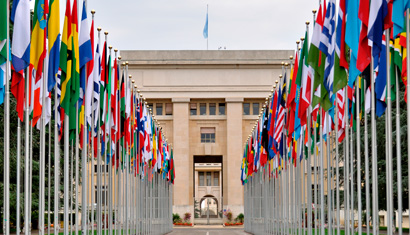
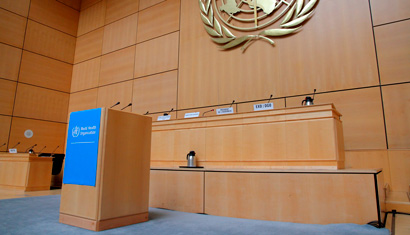
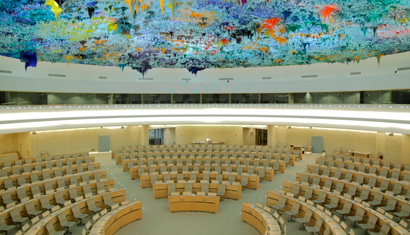
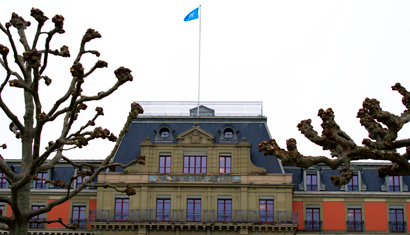
Our strategic presence in Geneva sets us apart as the sole NGO exclusively committed to economic, social, cultural, and environmental rights. This permits us to play a pivotal role in promoting and protecting these rights globally.
CEDAW issues Concluding Observations on women's access to land in Cameroon and Sierra Leone
The Committee on the Elimination of All Forms of Discrimination against Women (CEDAW) recently issued several Concluding Observations related to women's access to land in Cameroon and Sierra Leone. The Concluding Observations are a result of Parallel Reports submitted by the Global Initiative for Economic, Social and Cultural Rights and its local partner Positive Generation in Cameroon.
Regarding Cameroon, CEDAW expressed concern about women living in rural areas, including their lack of access to decision-making processes as well as "land grabbing from indigenous people and small-scale farmers, resulting in the loss of their self-sufficient livelihood, and obstacles to obtaining land titles, including prohibitive land transaction fees, which disproportionately affect women." CEDAW recommended that Cameroon "guarantee the right of indigenous women and women small-scale producers to ancestral and community lands and ensure that they have access to self-sufficient livelihoods" and "ensure that obstacles to land ownership are removed, including by accelerating the land reform, and that domestic courts, including customary courts, apply the Convention, particularly in relation to women’s land and property rights disputes." The Committee also addressed the prohibition on discrimination related to inheritance rights of women.
With respect to Sierra Leone, CEDAW expressed its concern "about the prevalence of harmful practices such as early marriages in rural areas and about the persistence of traditional customs limiting women’s access to land and inheritance" as well as "about delays in adopting the land policy, as well as the lack of measures to address rural women’s vulnerability to land acquisition by multinational mining companies, often resulting in forced evictions, displacement of women, and lack of adequate compensation. " The Committee went on to recommend that "Expedite its efforts in adopting the Land Policy and address the adverse effects of land acquisitions and long-term leases on rural women, and ensure that women are involved in the negotiations of land lease agreements and that their livelihoods are not negatively affected by such agreements."
According to Mayra Gomez, Co-Executive Director of the GI-ESCR, "We are pleased that the CEDAW Committee has issued such strong and clear recommendations on women's land rights in Cameroon and Sierra Leone. The Concluding Observations are very useful to groups working in country to advance these rights for women. Our partner, Positive-Generation, has worked to advance the rights of women affected by HIV in Cameroon and we were pleased to have been able to present a report to the CEDAW Committee on these issues jointly with them."
The next phase of this advocacy will be to work closely with local partners, including Positive Generation in Cameroon and Human Rights Defenders Network in Sierra Leone, to use these Concluding Observations to inform policies and practices at the national level.
The Concluding Observations on Cameroon can be found HERE.
The Concluding Observations on Sierra Leone can be found HERE.
The GI-ESCR / Positive Generation Parallel Report on Cameroon can be found HERE.
The GI-ESCR Parallel Report on Sierra Leone can be found HERE.
GI-ESCR Issue Brief: The dangerous work of defending rights to land, housing and productive resources
The effective protection of human rights associated with land, housing and productive resources requires grassroots and national advocates who can raise the alarm on rights violations and hold decision- and policy-makers accountable for the consequences of their actions. Yet, those defending the rights of local communities to land, housing and productive resources and highlighting abuses are coming under increasing attack for their work.
This Issue Brief discusses the dangerous work of defending rights to land, housing and productive resources and aims to highlight and to begin to map the trends so as to gain a better understanding of the nature of those attacks, risk factors and, importantly, for developing strategies and tools for prevention.
(Rabat) - In a list of issues released on Tuesday, 18 February, the United Nations Committee on the Rights of the Child (CRC) formally asked the Moroccan Government to explain the measures it has taken to ensure that all children have access, without any discrimination, to quality education. The Committee specifically requested that Morocco explain the measures taken to ensure that the development of private education does not come at the expense of public schools. This is a first victory for the Moroccan Coalition for Education for All (MCEFA), the Forum des Alternatives Maroc (FMAS) and the Global Initiative on Economic, Social and Cultural Rights (GI-ESCR), as several points that they had raised in their reports to the Committee were included in the list of issues of the CRC.
The Committee on the Rights of the Child, the UN body made up of international experts responsible for monitoring implementation of the Convention on the Rights of the Child, asked the Moroccan Government to explain ‘the measures [that] have been taken since the establishment of the 2008-2012 Emergency National Education Plan to ensure access of all children to a quality education, to end the discrimination which children, including children living in rural areas and girls, are still suffering’. They also required the government to explain ‘the measures taken to control the conditions and quality of education in private schools and to ensure that public school teachers are not transferred to private schools’.
The MCEFA, the FMAS and the GI-ESCR welcomed on Thursday the consideration by CRC of the issues they had raised and this new perspective on the increasing difficulties of the Moroccan educational system.
‘We are pleased that the Committee on the Rights of the Child has recognised that the issue of education, and in particular the question of the regulation of private education, is essential. This is the result of several months of work on this issue from the MCEFA and other organisations which has demonstrated and denounced discrimination in education created by the uncontrolled development of private education in Morocco. We now hope that the Government will respond accurately and transparently to the questions that have been submitted to them and we look forward to a fuller examination of privatisation of education in Morocco in September this year,’ declared the 3 organisations.
This list of issues published by the CRC follows a pre-review of Morocco by the CRC on 3 February 2014. The Moroccan Government must now respond in writing to questions posed by the Committee by 15 June 2014. Morocco will then be formally reviewed in plenary by the CRC in September 2014, after which the Committee will make written recommendations.
The organisations stand ready to contribute to the debate on the reform of the education system. They will keep on working on this topic with the Moroccan civil society in the coming months.
Documents:
· The list of issues raised by the CRC is available here: http://goo.gl/4P5Lch (French).
· A visual summary of key issues in the report is available here: http://goo.gl/MTGua8
· A copy of the report submitted to the United Nations Committee on the Rights of the Child is available here: http://goo.gl/1Y8TIk and the recommendations can be found here: http://goo.gl/tlZPtz
Global Initiative for Economic, Social and Cultural Rights: Bret Thiele on +1 218 733 1370+1 218 733 1370 and Sylvain Aubry on +212 6 22 37 86 37+212 6 22 37 86 37
Coalition Marocaine pour l’Éducation pour Tous: Ahmed Sehouate (Arabic and French) on +216 62 10 05 85
The Global Initiative for Economic, Social and Cultural Rights (GI-ESCR) is an international non-governmental human rights organization which seeks to advance the realization of economic, social and cultural rights throughout the world, tackling the endemic problem of global poverty through a human rights lens. See http://www.globalinitiative-escr.org/
The Moroccan Coalition on Education for All(MCEFA) is a Moroccan NGO created in 2010. It is a network of more than 50 Moroccan organisations interested in the valorisation of public education in Morocco.
The Forum des Alternative Maroc (FMAS) is a Moroccan NGO created in 2003 to promote democracy, human rights and social justice in Morocco. It works with an extensive network of national and grassroots civil society organizations in Morocco and beyond, in particular through its E-Joussour project (http://www.e-joussour.net/),a Maghreb/Machrek civil society portal. See http://www.forumalternatives.org/
UN human rights experts urge Kenya to repeal discriminatory sections in Matrimonial Property Act
February 17, 2014
A group of United Nations human rights experts today urged Kenya to repeal sections of the Marriage and Property Act which effectively deny women the right to marital property upon divorce or death of their spouse, unless they can prove they made a contribution to the acquisition of the property during their marriage.
“It is expected that very few women will be able to demonstrate such a contribution under the new provisions, since few Kenyan women have land title deeds in their own names and even less hold deeds jointly with men,” warned independent expert Frances Raday, who currently heads the UN Working Group on discrimination against women in law and practice.
“Such provisions are serious retrogressive steps in the protection of women’s equal access to land and property, and are in violation of Kenya’s international and regional human rights obligations,” Ms. Raday stressed. “They clearly discriminate against Kenyan women and are squarely at odds with equality provisions enshrined in the Kenyan Constitution.”
The Act, which came into force on 16 January 2014, could result in many Kenyan women losing access to the lands where they live and farm. Many rural households in Kenya are headed by women, who rely on the land not only to produce food, but also on the income generated by it to access health care services and educational opportunities for themselves and their families.
“Women will effectively have no security of tenure, or place to live with their children if their husband leaves them or dies, which will also increase their risk of experiencing violence,” the expert added. “The passage of the Act will have a detrimental impact on the right to food, the right to adequate housing and the right to an adequate standard of living for Kenyan women, children and communities.”
Ms. Raday’ appeal has also been endorsed by the Special Rapporteur on extreme poverty and human rights, Magdalena Sepúlveda; the Special Rapporteur on the right to food, Olivier De Schutter; the Special Rapporteur on Violence Against Women, its causes and consequences, Rashida Manjoo, and the Special Rapporteur on adequate housing, Raquel Rolnik.
“We regret the promulgation of this legislation in its current form and urge the Government of Kenya to repeal discriminatory sections of this Act, and to continue with the country’s advances towards full equality between men and women as established in the Kenyan Constitution,” the group of experts stated.
The Special Rapporteurs have engaged with the Kenyan Government concerning the provisions in question of the Marriage and Property Act, and expressed their readiness to assist the authorities in reviewing and bringing the Act into line with international human rights standards.
ENDS
The United Nations human rights experts are part of what it is known as the Special Procedures of the Human Rights Council. Special Procedures, the largest body of independent experts in the UN Human Rights, is the general name of the independent fact-finding and monitoring mechanisms of the Human Rights Council that address either specific country situations or thematic issues in all parts of the world.
They are charged by the Human Rights Council to monitor, report and advise on human rights issues. Currently, there are 37 thematic mandates and 14 mandates related to countries and territories, with 72 mandate holders. In March 2014, three new mandates will be added. Special Procedures experts work on a voluntary basis; they are not UN staff and do not receive a salary for their work. They are independent from any government or organization and serve in their individual capacity.
For further information and media inquiries, please contact Caroline Meenagh (+41 22 917 9202 /This email address is being protected from spambots. You need JavaScript enabled to view it.) or write to This email address is being protected from spambots. You need JavaScript enabled to view it.
For media inquiries related to other UN independent experts: Xabier Celaya, UN Human Rights – Media Unit (+ 41 22 917 9383 / This email address is being protected from spambots. You need JavaScript enabled to view it.)
Human Rights Committee set to scrutinize the United States regarding extra-territorial human rights obligations
The Human Rights Committee, which monitors compliance with the International Covenant on Civil and Political Rights (ICCPR), is set to scrutinize the United States regarding its extra-territorial human rights obligations under the Covenant. The U.S. will appear before the Committee in March 2014 for its periodic review.
The Global Initiative for Economic, Social and Cultural Rights successfully intervened with a Parallel Report laying out the extra-territorial obligations under the ICCPR and requesting that the Committee include scrutiny on those obligations within the periodic review of the U.S.
The List of Issues recently adopted by the Committee, which defines the scope of review, requires the U.S. to discuss its understanding of the "the scope of applicability of the Covenant with respect to individuals under its jurisdiction but outside its territory; in times of peace, as well as in times of armed conflict". As the Parallel Report makes clear, the jurisprudence of the Committee provides a clear articulation of the extra-territorial application of ICCPR obligations. Notwithstanding, the U.S. continues to states that the ICCPR only applies within U.S. territory.
The Global Initiative's Parallel Report for the periodic review also calls on the Committee to hold the U.S. accountable for extra-territorial obligations in the context of decisions made within international financial institutions such as the World Bank.
This examination of the U.S. provides advocates the opportunity to address the issue of extra-territorial obligations and provides the Committee the opportunity to finally settle this misinterpretation by the U.S. of its treaty obligations.
The Global Initiative's Parallel Report regarding the List of Issues can be found HERE.
The Global Initiative's Parallel Report on the legal analysis for the periodic review can be found HERE.
The Joint Global Initiative - International Human Rights Clinic at Western New England University School of Law factual Parallel Reports can be found HERE and HERE.
Privatization of education in Morocco breaches human rights: new report
(Geneva) – ‘Increased privatization of schools in Morocco is benefiting the elite and maintaining a mediocre public education system for the rest of the population. Increasing privatization in education in Morocco without strong government regulation is discriminatory, likely to exacerbate inequality, and if not properly dealt with in an expeditious manner would rise to a violation of Morocco’s obligations under international human rights law’, a leading coalition of non-governmental organisations said today.
The coalition, which has been coordinated by the Global Initiative for Economic, Social and Cultural Rights, has recently submitted a major report to the United Nations Committee on the Rights of the Child. The UN body of child rights experts will met in Geneva on 3 February2014 to consider Morocco’s human rights record.
‘Morocco is at risk of developing a two-speed education system which privileges fee-paying private education at the expense of quality and accessible education for the least advantaged and children in rural areas,’ said Sylvain Aubry, the report researcher for the Global Initiative for Economic, Social and Cultural Rights.
Thanks to the active support of private education providers by the Moroccan State, including through policy regulations and tax incentives, enrollments in private education in Morocco have risen sharply in the last decade. Between 1995 and 2010 private enrollments across all levels of the Moroccan education system more than doubled and at the primary level, enrollments more than tripled from 4% in 1999 to 13% in 2012.
Yet, 80% of these private schools in Morocco are fee-paying, for-profit schools in the urban Kenitra – Casablanca area. These schools target wealthy urban households, thus not improving access for the majority of the population who do not have the financial means to pay for schooling.
Recent data released by the UNESCO shows that in 2011 the poorest rural children were 2.7 times less likely to learn basics in reading than the richest children in urban areas, a gap which has increased by 26% since 2006.
According to the report, the increasing privatization of education in Morocco is accompanied by a widening gap in access to quality education and inequalities between the most advantaged and the most disadvantages families.
‘Despite the obligation under international law to take measures to increase access to quality education for all without discrimination, Morocco is taking measures which in fact increase inequalities’ said Bret Thiele, the Co-Executive Director of the Global Initiative for Economic, Social and Cultural Rights.
‘We are gravely concerned that the privatization of education in Morocco is exacerbating inequalities in education for disadvantaged children by creating a system that privileges the haves over the have-nots,’ Mr Thiele said.
The growing trend of inequalities and the continuous government support of private education has occurred despite previous warnings and recommendations by UN bodies and experts. In 2006, the UN Committee on Economic, Social and Cultural Rights raised concerns that Morocco ‘has a two-speed education system with a striking difference in level between public and private education which denies equal opportunities to low-income sectors of society’. The former UN Education Expert, Mr Vernor Muñoz Villalobos, similarly noted in 2006 after a visit to the country, ‘an apparently excessive promotion by the authorities of private education’.
The UN Committee’s review of Morocco comes at a critical time, with the nation’s King referring to the challenges in ensuring quality education for all due to the high fees charged by private schools in a recent speech to the nation from August 2013.
In addition, the current UN Right to Education expert, Mr Singh, warned in a recent report that ‘in many parts of the world inequalities in opportunities for education will be exacerbated by the growth of unregulated private providers of education, with wealth or economic status becoming the most important criterion to access a quality education’.
‘This is a very topical issue in Morocco right now, with changes in the education sector occurring at a fast pace. We urge the Government to look closely at the impacts on equality because their policy decisions now will have profound and long-lasting impacts on the education of Moroccan children and the future of our nation,’ said Mr Ahmed Sehouate, the president of the Coalition Marocaine pour l’Éducation pour Tous (the Moroccan Coalition on Education for All).
‘We call on the UN Child Rights Committee to contribute to efforts for human rights compliant reform by reinforcing to Morocco its primary obligation to allocate the maximum available resources towards ensuring that every child has access to free quality education’ Mr Thiele said.
‘The position of the Committee will be crucial for the future of Morocco, but also to highlight the risks that unregulated private education creates for the realisation of the right to education and to outline the applicable standards for the growing number of developing countries which are taking a similar path’ said Mr Aubry,
Documents:
A visual summary of the key issues in the report is available here http://goo.gl/MTGua8
A copy of the report submitted to the United Nations Committee on the Rights of the Child is available here http://goo.gl/1Y8TIk and the recommendations can be found here http://goo.gl/tlZPtz (in English).
Global Initiative for Economic, Social and Cultural Rights: Bret Thiele on +1 218 733 1370 and Sylvain Aubry on +33 7 81 70 81 96
Coalition Marocaine pour l’Éducation pour Tous: Ahmed Sehouate (Arabic and French) on +216 62 10 05 85
The Global Initiative for Economic, Social and Cultural Rights (GI-ESCR) is an international non-governmental human rights organization which seeks to advance the realization of economic, social and cultural rights throughout the world, tackling the endemic problem of global poverty through a human rights lens.
The Coalition Marocaine pour l’Éducation pour Tous (the Moroccon Coalition on Education for All, CMET) is a Moroccan NGO created in 2010. It is a network of more than 50 Moroccan organisations interested in the valorisation of public education in Morocco.
Advocacy Update on Rights to Housing, Land and Access to Productive Resources
The Global Initiative for Economic, Social and Cultural Rights is glad to announce the first in a series of updates that we are planning on publishing throughout 2014 and beyond, highlighting in particular important advancements in the areas of housing, land and access to productive resources. This publication, on Advocacy Update on Rights to Housing, Land and Access to Productive Resources, is meant to help inform advocates, policy makers, civil society organizations and other stakeholders about recent developments in the field, and draw attention to emerging areas of work.
It also includes a special ‘IN FOCUS’ section on ‘Defenders of Rights to Land, Housing and Productive Resources under Increasing Attack.’
We hope that this publication will be a useful resource for you and that it helps to raise awareness of the many advancements that are taking place at international, regional and national levels.
Access the Advocacy Update on Rights to Housing, Land and Access to Productive Resources HERE.
World Bank's private lending arm linked to human rights violations in Honduras
The World Bank’s Office of the Compliance Advisor Ombudsman (CAO) has found that World Bank's International Finance Corporation (IFC) failed to abide by its own ethical standards, including failing to ensure that human rights obligations are met, by continuing to finance Corporación Dinant, and Honduran corporation involved in palm oil plantations. The CAO's investigation was commenced after receiving information in 2011 from Rights Action, the International Federation for Human Rights (FIDH) and other advocacy groups regarding violations by Corporación Dinant, including:
• that IFC’s client (Dinant) conducted, facilitated or supported forced evictions of farmers in the Aguan Valley;
• that violence against farmers on and around Dinant plantations in the Aguan Valley occurred because of inappropriate use of private and public security forces under Dinant’s control or influence; and
• that IFC failed to identify early enough and/or respond appropriately to the situation of Dinant in the context of the declining political and security situation in Honduras, and specifically in the Aguan Valley, following the ouster of President Zelaya in June 2009.
In 2012, the Global Initiative for Economic, Social and Cultural Rights and Rights Action filed an amicus curiae brief arguing that the IFC has human rights obligations under international law and that the respective human rights obligations of Member States of the World Bank also must be respected.
The CAO relied heavily on a human rights analysis in finding that the IFC failed to adequately supervise the funded project and failed to ensure that Dinant abided by environmental and social standards, including international human rights standards. According to the CAO, the "IFC’s Policy on Social and Environmental Sustainability (Sustainability Policy) expresses the Corporation’s mission in terms of promoting sustainable private sector development" and the Sustainability Policy requires the IFC to “avoid infringing on the human rights of others and to address adverse human rights impacts business may cause or contribute to” and that "in this context the Sustainability Policy (2012) provides that the IFC will be guided by the International Bill of Human Rights and the eight core conventions of the International Labour Organization (ILO)."
Over 300 groups call for human rights in core of post-2015 development plan
10 December 2013
Over 300 groups call for human rights in core of post-2015 development plan
As governments meet at the United Nations this week to debate aspects of the sustainable development agenda to replace the Millennium Development Goals (MDGs) in 2015, over 300 civil society organizations from all parts of the world have come together to demand human rights be integrated into every aspect of the new framework.
Published on International Human Rights Day, the joint statement “Human Rights for All Post-2015” (below) will be presented to the Open Working Group (OWG) on the Sustainable Development Goals (SDGs) at its 6th session later this week. It sets out 10 practical, baseline implications of embedding existing human rights standards into the core of the sustainable development agenda.
The joint statement, advanced by a caucus of human rights organizations convened by the Center for Economic and Social Rights (CESR), Amnesty International and the Association for Women's Rights in Development, is part of a series of advocacy activities in New York and across the globe to ensure that human rights are not marginalized from the operational aspects of the sustainable development agenda.
For example, the caucus will hold a side event at the UN on Friday 13 December around the OWG official session on human rights, the right to development and global governance. “Human Rights at the Core of Sustainable and Just Development” will examine the concrete implications of anchoring the four dimensions of sustainable development in existing human rights norms. The Office of the United Nations High Commissioner for Human Rights will also convene a special session on Wednesday 11th, “More than a Vision: How to Integrate Human Rights into the Post-2015 Agenda”.
The joint statement, together with the range of events this week, are evidence of the unprecedented momentum around human rights in development debates. This year's Human Rights Day marks twenty years since the Vienna World Conference affirmed the interconnections between human rights and development. Two decades on, the practical, substantive proposals for integrating human rights into all aspects of the future development agenda can no longer be ignored.
****
JOINT STATEMENT Human Rights for All Post-2015 10 December 2013
Human rights have surged to the forefront of the debate about what will succeed the Millennium Development Goals in 2015. As human rights and social justice organizations worldwide, we feel compelled to lay out some of the baseline implications of embedding human rights into the core of the sustainable development agenda this time around.
At its essence, a post-2015 framework anchored in human rights moves from a model of charity to one of justice, based on the inherent dignity of people as human rights-holders, domestic governments as primary duty-bearers, and all development actors sharing common but differentiated responsibilities. Accordingly, the post-2015 framework should be designed as a tool to empower and enable people—individually and collectively—to monitor and hold their governments, other governments, businesses, international institutions and other development actors to account for their conduct as it affects people’s lives within and beyond borders. A sustainable development framework founded in human rights can serve as an instrument for people and countries to help unseat the structural obstacles to sustainable, inclusive and just development, prevent conflict and stimulate implementation and enforcement of all human rights—civil, political, economic, social and cultural rights, the right to development, and to a healthy environment.
The post-2015 framework must then at the very least respect and reflect pre-existing human rights legal norms, standards and political commitments to which governments have already voluntarily agreed. International human rights, environmental and humanitarian law, the Millennium Declaration, as well as related international consensus documents agreed in Rio, Vienna, Cairo, Beijing, Monterrey and Copenhagen and their follow-up agreements must form its non-negotiable normative base.
If it is going to incentivize progress while also preventing backsliding and violations, human rights principles and standards must go beyond the rhetorical, and have real operational significance this time around. Among other things, anchoring the post-2015 agenda in human rights for current and future generations implies that the framework:
Upholds all human rights for all. The framework should stimulate improved human rights process and outcomes for all people, especially the most vulnerable, in all countries global North and global South. Along with economic, social, cultural and environmental rights, any successor framework must include commitments to protect freedom of association, expression, assembly and political participation if it is to ensure an enabling environment for an empowered civil society, and protect human rights defenders, including women human rights defenders, as central agents translating international political commitments into lived realities.
Stimulates transparency and genuine participation in decision-making at all levels, throughout all policies including budget, financial, and tax policies. Access to information and meaningful and effective participation are not only fundamental human rights, but will also be critical to developing, implementing, and monitoring an effective and responsive post-2015 framework.
Integrates meaningful institutions and systems to ensure human rights accountability of all development actors. Lofty aspirations for a post-2015 agenda will surely fail if proper citizen-led systems of monitoring and human rights accountability are not built into the very DNA of the framework, with clear and time-bound commitments of all relevant actors. While states must remain the primary duty-holder in development, all development actors, including third-party states, the private sector and international financial institutions should be made responsive and accountable for achieving and not undermining global goals. Integrating substantive human rights criteria into assessments of progress towards development goals and commitments means monitoring both the policy and budgetary efforts of governments alongside development outcomes. Any post-2015 monitoring mechanism should complement and reinforce the Universal Periodic Review process for all states. A framework for ensuring accountability would benefit from constructive interaction with the existing human rights protection regime, as well as other relevant accountability mechanisms. In this context, we call for an accountability framework with binding commitments, supported by effective monitoring and enforcement mechanisms, to be agreed at the global level. This framework should reaffirm the spirit of the 1986 Declaration on the Right to Development and it should be based on three fundamental principles: mutual accountability (donors and partners are equally accountable for development progress); democratic ownership of partner countries (alignment of donor countries to policy objectives set by developing countries, through inclusive and democratic processes); and inclusive partnerships (participation of different varieties of development stakeholders, State and non-State actors).
Is backed by national mechanisms of accountability, such as judiciaries, parliaments, national human rights institutions, reinforced by regional and international human rights mechanisms such as the treaty bodies and the Universal Periodic Review mechanism, so as to ensure the implementation of the post-2015 commitments. The post-2015 development agenda is well-placed to encourage governments to improve access to justice for people living currently in poverty by monitoring measures to eradicate existing barriers.
Ensures that the private sector, at the very least, does no harm. The post-2015 framework must reflect current international consensus that governments have a duty to protect human rights through the proper oversight and regulation of private actors, especially of business and private financial actors, to guarantee in practice that they respect human rights and the environment, including in their cross-border activities. At the very least, no governments should allow their territory to be used for illegal or criminal activities elsewhere, such as tax evasion, depositing assets obtained through corruption, environmental crimes or involvement in human rights violations, no matter the perpetrator.
Eliminates all forms of discrimination and diminishes inequalities, including socioeconomic inequalities. Human rights can only be realised within socio-economic and environmental boundaries if we also reduce inequalities of wealth, power and resources. Governments have a particular obligation under human rights law to protect the rights of the most marginalized and excluded, and to take additional measures to ensure that they enjoy their rights on an equal basis with others. Protecting decent work, and diminishing unfair wage disparities is also fundamental to reducing socio-economic inequality, as is reforming tax and fiscal policy and promoting human rights alternatives to austerity nationally and globally to unleash the resources necessary to finance human rights fulfillment. The timely collection and disaggregation of data on the basis of various grounds of compound discrimination is essential to identify, make visible and respond to inequalities and violations of human rights and to increase accountability. At a national level, data should be collected and disaggregated based on country-relevant factors as defined by rights-holders.
Specifically and comprehensively supports women's rights. Addressing gender-based violence, guaranteeing sexual and reproductive rights, ensuring women’s rights to and control over land, property and productive resources and their economic independence, recognizing the care economy and ensuring women’s rights to social protection and the equal distribution of paid and unpaid work, and their rights to participation in decision-making are critical, not only to realize women's human rights and achieve gender equality, but for enabling women’s full and active participation in economic, political and social life.
Enables the currently disadvantaged and commonly discriminated against and excluded groups to be effective agents of their own development by drawing on the provisions of human rights standards aimed at eliminating discrimination on grounds such as race, disability, migrant or indigenous status, age, sexual orientation, gender identity, etc.
Upholds the legal obligation to fulfill the minimum essential levels of economic, social, and cultural rights, without retrogression. This would imply a focus on universal or “zero” targets, such as the provision of comprehensive social protection floors, universal health coverage, minimum food security guarantees, and other floors below which no one anywhere will be allowed to fall.
Tackles structural drivers of inequality, poverty and ecological devastation at the global level. A genuine and balanced global partnership then would enable people and institutions to monitor the common but differentiated responsibilities of all actors to eliminate rather than perpetuate these global obstacles. To be good-faith partners then, governments, business and international institutions must assess the human rights impact beyond their borders of their policies and agreements in areas such as corporate accountability, environment, trade, investment, aid, tax, migration, intellectual property, debt, weapons trade and military cooperation, monetary policies and financial regulation. Existing human rights norms can provide a common set of standards and useful yardstick to assess policy coherence for sustainable development.
At a time of great uncertainty, multiple crises and increasing insecurity and conflict, let us not found the 21st century sustainable development framework on 'bracketed rights’ and broken promises, but instead on a bold reaffirmation of human rights for all.
This joint statement is supported by the following organizations:
1. Action Canada for Population and Development (ACPD), Canada 2. Active Remedy LTD, UK 3. ADD International, United Kingdom 4. ADRA Germany, Germany 5. Adventist Development and Relief Agency, International 6. Global Afluentes SC, México 7. African Foundation for Environment and Development (AFED), Nigeria 8. African Indigenous Women's Organization, Eastern and Southern Africa 9. African Women's Development and Communication Network (FEMNET), Kenya 10. Age International, United Kingdom 11. Centro de Estudios para la Promoción y Defensa de los Derechos Fundamentales y Generacionales (AGORA), Peru 12. Agricultural Missions, USA 13. Alianza Democratica de Organizaciones Civiles ADOC, México 14. Alliance contre la Pauvreté au Mali, Mali 15. Alliance Sud, Switzerland 16. Amnesty International, International 17. Antalya Kadin Danisma Merkezi ve Dayanisma Dernegi, Turkey 18. Anti Corruption Coalition Uganda (ACCU), Uganda 19. Arab NGO Network for Development (ANND), International 20. ARCA, Costa Rica 21. Article 19 (Global Campaign for Free Expression), UK/International 22. ASCA, España 23. Asia Pacific Alliance for Sexual and Reprodustive Health and Rights (APA), Thailand 24. Asociación Nacional de Organizaciones de la Sociedad Civil (SINERGIA), Venezuela 25. Asosacion Gestion Salud Poblacion (AGSP), Peru 26. Associação Brasileira de Direitos e Bens Comuns (Abong), Brazil 27. Association Camerounaise pour la prise en charge des Personnes Agées (ACAMAGE), Cameroon 28. Association Démocratique des Femmes du Maroc, Morocco 29. Association for emancipation, solidarity and equality of women in Macedonia (ESE), Macedonia 30. Association for Women’s Rights in Development (AWID), International 31. Association pour le développement et de la promotion des droits humains, Mauritanie 32. ASTRA Network, International 33. Atasehir Kent Konseyi, Turkey 34. Australian Centre for International and Tropical Health, the University of Queensland, Australia 35. Avocats Sans Frontières (ASF), Belgium 36. AWAZ Foundation Pakistan: Centre for Development Services (AWAZCDS-Pakistan), Pakistan 37. Ayvalık Bağımsız kadın İnisiyatifi, Türkiye 38. Balance Promoción para el Desarrollo y Juventud, México 39. BOHP, Turkey 40. Cameroon Youths and Students Forum for Peace (CAMYOSFOP), Cameroon 41. Canadian Council for International Co-operation (CCIC), Canada 42. Católicas por el derecho a decidir, México 43. Centro de Justicia Internacional (CDJI), México 44. Center for Economic and Social Rights (CESR), International 45. Center for International Environmental Law (CIEL), USA 46. Center for International Human Rights (CIHR), USA 47. Center for Reproductive Rights (CRR), International 48. Center for Women Policy Studies, USA 49. Center for Women’s Global Leadership at Rutgers University (CWGL), USA 50. Center for Youth Development & Sustainable Democracy (CEYDESUD), Liberia 51. Center of Concern, USA 52. Centre For 21st Century Issues (C21st), Nigeria 53. Centre for Research and Advocacy, Manipur (CRAM), India 54. Centre tricontinental – CETRI, Belgium 55. Centro de Documentacion en Derechos Humanos "Segundo Montes Mozo S. J." (CSMM), Ecuador 56. Centro de Estudios Sociales y Culturales Antonio de Montesinos AC (CAM), Mexico 57. Centro de Información y Desarrollo de la Mujer – CIDEM, Bolivia 58. Centro de Investigación para la Acción Femenina (CIPAF), Dominican Republic 59. Centro de Investigación y Educación Sexual (CIES-ÑEPYRU), Paraguay 60. Centro Juana Azurduy, Bolivia 61. Challenging Heights (CH), Ghana 62. CHOICE for Youth and Sexuality, The Netherlands 63. Christian Aid, UK 64. Church of Sweden, Sweden 65. CIVICUS: World Alliance for Citizen Participation, International 66. Civil Society MDG Campaign/GCAP Zambia (CSMDGC/GCAP Zambia), Zambia 67. Climate Change & Development NGO Alliance, International 68. Closet de Sor Juana, Mexico 69. Colectivo Feminista Panteras Rosas, Nicaragua 70. Collective For Research and Training on Development-Action (CRTD-A), Lebanon 71. Colour of Poverty - Colour of Change, Canada 72. Comision Ecumenica de Derechos Humanos (CEDHU), Ecuador 73. Commonwealth Medical Trust (Commat), UK 74. Community And Family Aid Foundation, Ghana 75. CONCORD, Sweden 76. Confederación Colombiana de ONG, Colombia 77. CONGCOOP, Guatemala 78. Constitution Research Fund NGO, Azerbaijan 79. COUP DE POUCE ONGD (COUPDEPOUCE/ONGD), Democratic Republic of Congo 80. Colectivo Regional De Adolescentes Y Jóvenes Por La Prevención Del Embarazo En Adolescentes (CRAJPEA), Peru 81. Centre for Research, Communication and Gender in Early Childhood Education (CRECHE), Kenya 82. CYINDEP, Cyprus 83. Defensores PROCDN, Puerto Rico 84. Desarrollo, Educación y Cultura Autogestionarios Equipo Pueblo (DECA Equipo Pueblo), Mexico 85. Development Alternatives with Women for a New Era (DAWN), International 86. Dharti Development Foundation Sindh, Pakistan 87. DIGNITY - Danish Institute Against Torture, Denmark 88. Deutsche Stiftung Weltbevölkerung (DSW), Germany 89. Ecological Society of the Philippines, Philippines 90. Egyptian Center for Economic and Social Rights (ECESR), Egypt 91. Egyptian Initiative for Personal Rights (EIPR), Egypt 92. ELDER KDM, Turkey 93. End Water Poverty (EWP), UK 94. ENDA Tiers Monde, Sénégal 95. EOTO World, USA 96. Equality Monitoring Women's Group (ESITIZ), Turkey 97. Equidad de Género, Ciudadanía, Trabajo y Familia (Equidad), Mexico 98. Equilibres & Populations (EquiPop), France 99. Espacio de Coordinación de Organizaciones Civiles sobre Derechos Económicos, Sociales y Culturales (Espacio DESC), Mexico 100. European Network of Migrant Women (ENoMW), Belgium 101. European NGOs for Sexual and Reproductive Health and Rights, Population and Development (EuroNGOs), International 102. European Womens Lobby Coordination for Turkey (EWL Turkey), Turkey 103. Ev Eksenli Calisan Kadinlar Calisma Grubu, Turkey 104. Fair Trade Advocacy Office (FTAO), Belgium 105. Fairtrade Sweden, Sweden 106. FANCA, Costa Rica 107. Federacion de Estudiantes de la Universidad de Costa Rica, Costa Rica 108. Federation for Women and Family Planning, Poland 109. Feminist Atolye (FEMA), Cyprus 110. FemLINKPACIFIC, Fiji 111. FIAN International, International 112. FIDA, International 113. FIFCJ, Argentina 114. Finnish NGDO platform to the EU Kehys, Finland 115. Forest Peoples Programme, UK 116. Forum for Women and Development (FOKUS), Norway 117. Four Freedoms Forum, USA 118. Fundacion Arcoiris, Mexico 119. Fundacion Construir, Bolivia 120. Fundación de Desarrollo Integral Causana, Ecuador 121. Fundación Diversencia, Bolivia 122. Fundación para Estudio e Investigación de la Mujer –FEIM, Argentina 123. Fundación Reflejos de Venezuela (FRV), Venezuela 124. FUNETAP, Colombia 125. Future Worlds Center, Cyprus 126. GCAP China, China 127. GCAP Pakistan, Pakistan 128. Gender at Work (G@W), International 129. Género, Etica y Salud Sexual AC (GESS), Mexico 130. Gestos-Hiv, Communication and Gender, Brazil 131. Global Alliance Against Traffic in Women (GAATW), International Secretariat 132. Thailand 133. Global Call to Action Against Poverty (GCAP)-Kenya, Kenya 134. Global Campaign for Education (GCE), International 135. Global Fund for Women (GFW), USA 136. Global Initiative for Economic, Social and Cultural Rights, International 137. Global Resposibility Platform, Austria 138. Good Energies Alliance Ireland (GEAI), Ireland 139. Gram Bharati Samiti (GBS), India 140. Gray Panthers, USA 141. Green Earth Zambia (GEZ), Zambia 142. Greentreen, Bangladesh 143. Grupo Artemisa Honduras, Honduras 144. Grupo De Mujeres de San Cristobal Las Casas, AC – Colem, Mexico 145. Grupo de Trabajo Cambio Climático y Justicia (GTCCJ), Bolivia 146. Grupo Diver Radio, Honduras 147. Grupo Safo, Nicaragua 148. Habitat International Coalition - Housing and Land Rights Network, Egypt 149. Hawai'i Institute for Human Rights, Hawaii (USA) 150. Help and Development Organization (HDO), Pakistan 151. HelpAge International, UK 152. HERA - Health Education and Research Association, Macedonia 153. Hope for the Needy, Internatiaonal 154. Human Development Society- HDS, Pakistan 155. IBON International, International 156. Instituto de Investigación Cultural para Educación Popular (INDICEP), Bolivia 157. Indigenous Information Network, Kenya 158. Indigenous Peoples' Rights Activists Network (IPRAN), Nepal 159. Institute of Cultural Affairs (ICA)-Benin, Benin 160. Instituto Mexicano de Derechos Humanos y Democracia A.C., Mexico 161. Instituto Qualivida, Brasil 162. Integrated Regional Support Programme (IRSP), Pakistan 163. Interculturalidad, Salud y Derechos AC (INSADE), Mexico 164. International AIDS Women Caucus (IAWC), International 165. International Alliance Of Women, Greece 166. International Associattion of Religious Freedom South Asia (IARF SACC), India 167. Centre International de Droit Comparé de l'Environnement (CIDCE), International 168. International Council on Social Welfare (ICSW), Netherlands 169. International HIV/AIDS Alliance, UK 170. International Network for the Prevention of Elder Abuse (INPEA), USA 171. International Planned Parenthood Federation, International 172. International Planned Parenthood, East & South East Asia & Oceania Region, Malaysia 173. International Presentation Association of the Sisters of the Presentation, International 174. International Trade Union Confederation (ITUC), International 175. International Women's Health Coalition (IWHC), International 176. Ipas, International 177. IRIS Esitlik Gozlem Grubu, Turkey 178. Isis International, Philippines 179. İstanbul University, Turkey 180. Jeunes Volontaires pour l'Environment Nepal (JVE-NEPAL), Nepal 181. Jeunes Volontaires pour l'Environnement, Togo 182. Jeunesse Active de Guinee (JAG), Guinea 183. Juventud Frente Amplio, Costa Rica 184. Kadin Calismalari Dernegi, Turkey 185. Kadin Partisi Girisimi, Turkey 186. Kadın Adayları Destekleme Derneği (KA.DER), Turkey 187. KAMER Vakfi, Turkey 188. Karadeniz İlleri Kadın Platformu Trabzon derneği KİKAP TRABZON, Turkey 189. Karadeniz Kadın Dayanışma Derneği (KARKAD-DER), Turkey 190. Keig Platform (Women's Labor and Employment in Turkey), Turkey 191. Kejibaus, Nigeria 192. Kenya Debt Relief Network (KENDREN), Kenya 193. Kepa, Finland 194. Kikandwa Environmental Association (KEA), Uganda 195. Kikap Trabzon, Turkey 196. Kirmizi Biber Dernegi, Turkey 197. Kolectiva Rebeldías Lésbicas, Peru 198. KULU-Women and Development, Denmark 199. Fundación Red Nicaraguense de Comercio Comunitario (RENICC), Nicaragua 200. Red Latinoamericana de Católicas por el Derecho a Decidir (CDD-AL), International 201. Landesa, USA 202. Latin-American Campaign for the Right to Education (CLADE), International 203. Leonard Cheshire Disability (LCD), UK 204. Liga Brasileira de Lésbicas, Brazil 205. Lithuanian National Non-Governmental Development Cooperation Organisations' Platform, Lithuania 206. National Council of Swedish Youth Organizations (LSU), Swedish 207. Manodiversa Asociacion Civil, Bolivia 208. Mavigöl Kadin Dernegi, Turkey 209. MCP Bolivia Fondo Mundial, Bolivia 210. Mercy Sisters, Ireland 211. MGLT, Peru 212. Missionary Oblates of Mary Immaculate (OMI), Italy 213. Model Mission of Assistance in Africa (MOMI AFRICA), Nigeria 214. Mor Salkim Kadin Dayanisma Dernegi, Turkey 215. Mother Child with AIDS Support Organisaton (MOCASO), Kenya 216. Mother of Hope Cameroon-MOHCAM, Cameroon 217. Mouvement Français pour le Planning Familial (MFPF), France 218. Mujer Y Salud – MYSU, Uruguay 219. MujeresMundi, Belgium 220. Mus kadin Dernegi – MUKADDER, Turkey 221. MyRight, Sweden 222. Nagle Community, Ireland 223. National Coalition Against Racial Discrimination (NCARD), Nepal 224. National Council for Research on Women, USA 225. National Fisheries Solidarity Movement, Sri Lanka 226. National Indigenous Women Federation (NIWF), Nepal 227. Neighbourhood Community Network, India 228. NGO Committee on Ageing , USA 229. NGO Federation of Nepal (NFN), Nepal 230. Niger Delta Women's Movement for Peace and Development, Nigeria 231. NOMREK Legal Consultants and Advocates, Uganda 232. OceaniaHR, USA 233. Ohaha Family Foundation (TTOFF), Nigeria 234. One Million Voices for Nicaragua- ANSC, Nicaragua 235. One Small Voice, USA 236. Organisation pour la Promotion du Tourisme de l'Education et de l'Environnement (OPTEE/ONG), Madagascar 237. Oxfam Interantional, International 238. Parahita Foundation, Indonesia 239. Participatory Research Action Network (PRAN), Bangladesh 240. Peace Movement Aotearoa (PMA), New Zealand 241. People's Health Movement, International 242. Personas, Sexualidades y Generos (PSG), Costa Rica 243. Peruvian American Medical Society (PAMS), USA-Peru 244. Plan International International/UK 245. Planned Parenthood Association of Thailand (PPAT), Thailand 246. Plataforma Interamericana de Derechos Humanos, Democracia y Desarrollo (PIDHDD), International 247. Population Matters, UK 248. Portuguese NGDO Platform, Portugal 249. Presentation Ireland, Ireland 250. Presentation Justice Network Ireland (PJNI), Ireland 251. Presentation Sisters South East, Ireland 252. Presentation Sisters Western Australia, Australia 253. Presentation Sisters, Northern Province PBVM, Ireland 254. Presentation Sisters, Wagga Wagga PBVM, Australia 255. Profamilia, Puerto Rico 256. Realizing Sexual and Reproductive Justice (RESURJ), International 257. Red Departamental de Mujeres Chocoanas RDMUCHO, Colombia 258. Red Multicultural de Mujeres Trans de Guatemala (REDMMUTRANS), Guatemala 259. Red Nicaraguense de Comercio Comunitario (RENICC), Nicaragua 260. Research Institute Without Walls (RIWW), USA 261. Réseau des Organisations de Développement et Associations de Défense des Droits de l'Homme et de la Démocratie (RODADDHD), Niger 262. Ruah Community Services, Australia 263. Rwanda Union Of The Youth And Children With Disabilities, Rwanda 264. Sampark Trust, India 265. Sedane Labour Resource Center (Lips), Indonesia 266. Seeds India, India 267. Service de Renforcement et d'Appuis Aux Communautés de Base et aux organisations de la Société Civile en Afrique Centrale (SERACOB), Democratic Republic of Congo 268. République Démocratique du Congo (RDC) 269. Servicios Ecumenicos Para Reconciliacion Y Reconstruccuion (SERR), USA 270. Shelter and Settlements Alternatives:Uganda Human Settlements Network (SSA:UHSNET), Uganda 271. Sisters of Mercy, Ireland 272. Slow Food Tanganyika, Democratic Republic of Congo 273. Social Watch, International 274. Menschen fuer Solidaritaet, Oekologie und Lebensstil (SOL), Austria 275. Soroptimist International, International 276. Southern Africa Human Rights NGO Network (SAHRINGON), Tanzania 277. Southern African Faith Communities' Environment Institute (SAFCEI), South Africa 278. Sri Lanka United Nations Friendship Organisation (SUNFO), Sri Lanka 279. Stand Up For Your Rights, The Netherlands 280. Stop AIDS Alliance, Belgium 281. Study Center for Gobernability and Democracy (CEGODEM), Nicaragua 282. Support for Women in Agriculture and Environment (SWAGEN), Uganda 283. Sustainable Environment Development Watch (SusWatch-Kenya), Kenya 284. Taller Salud, Puerto Rico 285. TANGO, The Gambia 286. Teatro Cabaret Reinas Chulas, AC, Mexico 287. Terre Des Hommes, International 288. The Atlas Alliance, Norway 289. The Center for Gender Research and Study, Satya Wacana Christian University, Indonesia 290. The Coexist Initiative, Kenya 291. The Equal Rights Trust (ERT), UK 292. The LO-TCO Secretariat of International Trade Union Development Cooperation, Sweden 293. The National Council of Swedish Youth Organisations (LSU), Sweden 294. The Planned Parenthood Association of Thailand (PPAT), Thailand 295. The Swedish IPPF Member Association (RFSU), Sweden 296. Third World Network, International 297. Tobacco - Free Association Of Zambia, Zambia 298. Uganda Coalition for Sustainable Development (UCSD), Uganda 299. UNA Sweden, Sweden 300. Unión Nacional de Instituciones para el Trabajo de Acción Social – UNITAS, Bolivia 301. Union of Sisters of the Presentation of the B.V.M. - US Province, USA 302. United Nations Population Fund (UNFPA), Uganda 303. University of Puerto Rico School of Public Health, Puerto Rico 304. Väestöliitto - Family Federation of Finland, Finland 305. Virginia Gildersleeve International Fund (VGIF), USA 306. WASH United, Germany 307. WaterAid, UK 308. WaterAid Sweden, Sweden 309. Network for Women´s Rights and Feminist Perspectives in Development (WIDE), Austria 310. Witness, International 311. Women for Women's Human Rights - New Ways (WWHR), Turkey 312. Women in Europe for a Common Future (WECF), International Women in Law and Development in Africa (WiLDAF/FeDDAF-WASRO/BSRAO), International 313. Women Peacemakers Program (WPP), The Netherlands 314. Women Won't Wait Campaign, International 315. Womens Advocates Sierra Leone, Sierra Leone 316. Women's Coalition Turkey, Turkey 317. Women's Global Network for Reproductive Rights (WGNRR), International 318. World Federation of United Nations Association, Sweden 319. World Young Women's Christian Association (World YWCA), Switzerland 320. Worldwide Filipino Alliance –WFA, Philippines 321. YAKA Kadin Kooperatifi, Turkey 322. Yasam Evi Kadin Dayanisma Dernegi, Turkey 323. Youth Coalition for Education in Liberia (YOCEL), Liberia 324. Zambia Asthma Association (ZAA), Zambia 325. Zambia Heart And Stroke Foundation, Zambia 326. Zi Teng, Hong Kong
Ana Clara works as a Programme Officer on Public Services with the Global Initiative for Economic, Social, and Cultural Rights. She holds a master’s degree in Human Rights and Humanitarian Action from Sciences Po in Paris, where she focused on economic, social, and cultural Rights, and Latin American and gender studies. She holds a Bachelor of Laws from Universidade Federal de Mato Grosso in Brazil.
Ana Clara previously worked on litigation claims concerning the right to social security and the right to health at the Public Defender’s Office and Federal Court of Justice in Brazil. She also supported the work of the Special Rapporteur on Economic, Social, Cultural, and Environmental Rights of the Inter-American Commission on Human Rights. Recently, she worked on strategic litigation before the Inter-American Court of Human Rights as part of the team of the Center for Justice and International Law.
Ana Clara, country is Brazil (Based in Paris).
ASHINA MTSUMI
PROGRAMME OFFICER -PUBLIC SERVICES & REPRESENTATIVE FOR AFRICA
Ashina works as the Programme Officer for Public Services and Representative for Africa with the Global Initiative for Economic, Social and Cultural Rights. She is an Advocate of the High Court of Kenya, with an LL.B degree from the University of Nairobi, Kenya, and an LL.M (with distinction) in Human Rights and Democratisation in Africa from the Centre for Human Rights, University of Pretoria, South Africa.
Passionate about social justice, she has worked in the human rights sector for over six years at the intersection of global and national struggles for just systems of public service delivery to ensure everyone can enjoy their socio-economic rights, first at the Economic and Social Rights Centre-Hakijamii in Kenya and then at GI-ESCR. In particular, she has led and supported research and advocacy at local, national and global research and advocacy focused on the human rights legal framework relating to the rights to land, housing, education, health and water, for marginalised communities. Her research interests also include human rights and economic policy and the contribution that human rights obligations can make to the formulation and implementation of economic policy.
Ashina is based in Nairobi, Kenya.
BELÉN QUELLET
SENIOR COMMUNICATIONS OFFICER
Belén has a BA in International Relations. She lived in India and the Philippines just after graduating where she volunteered for three years in health and education projects. Upon her return to Argentina, where she is native from, she joined Red Solidaria as volunteer and international aid coordinator. She worked as a journalist and program manager at La Nación newspaper foundation in Buenos Aires, to later become Social Media information specialist at the US Embassy in Buenos Aires. She acted there as Liaison Officer with other sections and became Grant Officer representative. She was selected to become HelpArgentina's Executive Director to help expand fundraising opportunities abroad for NGOs from other Latin American countries, and successfully transitioned the organization into PILAS, Portal for Investment in the Latin American Social Sector. From there she moved on to working at a new media startup, RED/ACCION, as Engagement Editor and Membership coordinator before joining us as Communications Officer.
Belén is based in Buenos Aires, Argentina.
LORENA ZENTENO
RESEARCH ASSOCIATE
Lorena Zenteno is a PhD student at the University of Edinburgh. Her primary research interests include the human rights dimensions of climate change and environmental impacts, climate change justice, gender, and the judiciary’s role in the climate change crisis. Lorena has worked for several years in Chile, as a judge, as a law clerk, in the Court of Appeal of Concepcion, Santiago and in the Constitutional Chamber of the Supreme Court of Chile. She is a member of the Environment and Human Rights Commission of the National Association of the Chilean Judiciary, dedicated to study and discuss climate change and environmental impacts on human rights. Lorena is the Chilean National Rapporteur on Global Climate Litigation database for the Sabin Center for Climate Change Law of Columbia University.
She was a senior researcher for the former UN Special Rapporteur on Cultural Rights, Karima Bennoune, from September 2018 until September 2021. Supported and assisted the UN Special Rapporteur to fulfil his mandate to the UN General Assembly and UN Human Rights Council.
She holds an LL.B. from Universidad de Concepcion, a LL.M. in Environmental Law from the University of Davis, California, and a Master in Business Law from the University Pompeu Fabra, Barcelona, Spain. Lorena is a member of the the Global Network for the Study of Human Rights and the Environment.
Lorena is based in Geneva, Swiss.
ZSUZSANNA NYITRAY
PROGRAMME OFFICER -RIGHT TO EDUCATION
Zsuzsanna works as Right to Education Officer with the Global Initiative for Economic, Social and Cultural Rights. Prior to joining GI-ESCR, she assisted in the drafting process of the Abidjan Principles on the Right to Education and the development and publication process of the Commentary of the Abidjan Principles as a consultant. Previously, she has worked with the Open Society Justice Initiative as an Aryeh Neier Fellow on issues such as equality and non-discrimination, Roma rights, the right to education, economic justice, access to justice and the rule of law. She has also worked as a lawyer with the Hungarian Civil Liberties Union on educational segregation, Roma rights and hate crimes. She holds an LL.M in Public International Law from the University of Edinburgh and a Law Degree from the Eötvös Loránd University Budapest.
Zsuzsanna is based in Budapest, Hungary.
DONATE
If you enjoy our work, please consider making a donation!
No amount is too small. Your contribution will help us fight for transformative change to end endemic problems of social and economic injustice.
The Global Initiative for Economic, Social and Cultural Rights is a 501(c)(3) non-profit organisation. Donations are tax-deductible in many countries, including the United States.
MAGDALENA ROCHI
PROGRAMME OFFICER - CLIMATE AND ENVIRONMENTAL JUSTICE
Magdalena works as Programme Officer on Climate and Environmental Justice for the Global Initiative for Economic, Social and Cultural Rights. She is an international lawyer working on the intersections between human rights, environmental and economic law. Prior to joining GI-ESCR, she worked dealing with the protection of economic and social rights in Argentina, at an NGO focused on strategic litigation and as a clerk in the judiciary. She holds an LL.B. and a JD from the University of Buenos Aires, Argentina, where she specialised in International Law and an LL.M from the Geneva Academy of International Humanitarian Law and Human Rights, Switzerland.
Magdalena is based in Buenos Aires, Argentina.
ASHINA MTSUMI
OFICIAL DE PROGRAMA - SERVICIOS PÚBLICOS Y REPRESENTANTE PARA ÁFRICA
Ashina es oficial del Programa para los Servicios Públicos y Representante para África de la Global Initiative for Economic, Social and Cultural Rights. Es abogada de la Corte Suprema de Kenia, egresada (LL.B) de la Universidad de Nairobi, Kenia, y con un máster (LL.M) en derechos humanos y democratización en África, completado con honores, en el Centro para los Derechos Humanos de la Universidad de Pretoria en Sudáfrica. Ashina es una apasionada de la justicia social, y ha trabajado en el área de los derechos humanos en el marco de las luchas nacionales y mundiales por sistemas más justos de prestación de servicios públicos, que garanticen a todos el disfrute de sus derechos socioeconómicos. Primero trabajó en el Economic and Social Rights Centre de Hakijamii, Kenia, y luego, en el GI-ESCR. Concretamente, ha dirigido y apoyado la investigación y la defensa, a nivel local, nacional y mundial, del marco legal de derechos humanos para los derechos de las comunidades marginadas a la tierra, la vivienda, la educación, la salud y el agua. Sus intereses en la investigación se orientan también a los derechos humanos y las políticas económicas, así como a la contribución que el cumplimiento de los derechos humanos hace a la formulación y ejecución de las políticas económicas.
Ashina reside en Nairobi, Kenia.
ZSUZSANNA NYITRAY
OFICIAL DE PROGRAMA - DERECHO A LA EDUCACIÓN
Zsuzsanna es oficial del Programa de Derecho a la Educación de la Global Initiative for Economic, Social and Cultural Rights. Antes de unirse a GI-ESCR, colaboró, como consultora, en la redacción de los Principios de Abiyán sobre el derecho a la educación, así como en la elaboración y publicación del Comentario de los Principios de Abiyán. Previamente, Zsuzsanna trabajó con la Open Society Justice Initiative como becaria de la Aryeh Neier Fellowship, en temas como la igualdad y la no discriminación, los derechos de los romaníes (Roma Rights), el derecho a la educación, la justicia económica, el acceso a la justicia y el estado de derecho. También ha trabajado como abogada con la Hungarian Civil Liberties en la segregación educativa, los derechos de los Romaníes y los crímenes de odio. Tiene un máster (LL.M) en derecho público Internacional por la Universidad de Edimburgo y una licenciatura en Derecho por la Universidad Eötvös Loránd, Budapest.
Zsuzsanna reside en Budapest, Hungría.
BELÉN QUELLET
SENIOR AGENT DE COMMUNICATION
Belén est titulaire d’un BA en relations internationales. Juste après avoir obtenu son diplôme, elle a vécu en Inde et aux Philippines, où elle s'est portée volontaire pendant trois ans pour des projets de santé et d'éducation. À son retour en Argentine, d'où elle est originaire, elle a rejoint Red Solidaria en tant que volontaire et coordinatrice de l'aide internationale. Elle a travaillé comme journaliste et responsable de programme à la fondation du journal La Nación à Buenos Aires, pour devenir ensuite spécialiste de l'information sur les médias sociaux à l'ambassade des États-Unis à Buenos Aires. Elle y a joué le rôle d'agent de liaison avec les autres sections et est devenue représentante des agents de subvention. Elle a été choisie pour devenir la directrice exécutive de HelpArgentina afin d'aider à développer les possibilités de collecte de fonds à l'étranger pour les ONG d'autres pays d'Amérique latine, et a réussi la transition de l'organisation vers PILAS, le portail d'investissement dans le secteur social latino-américain. Elle a ensuite travaillé pour une start-up de nouveaux médias, RED/ACCION, en tant que rédactrice chargée de l'engagement et coordinatrice des membres, avant de nous rejoindre en tant que responsable de la communication.
Belén vit à Buenos Aires, en Argentine.
ANA CLARA CATHALAT
OFICIAL ASOCIADO DE PROGRAMA- SERVICIOS PÚBLICOS
Ana Clara Cathalat colabora como socia en la Global Initiative for Economic, Social, and Cultural Rights, mientras prosigue con su máster en derechos humanos y acción humanitaria en la Universidad Sciences Po, París. Allí centra su interés en los derechos económicos, sociales y culturales y en estudios de género en América Latina. Tiene una licenciatura en derecho por la Universidad Federal de Mato Grosso, Brasil.
Previamente, Ana Clara trabajó en reclamaciones judiciales relacionadas con el derecho a la seguridad social y el derecho a la salud en la Oficina del Defensor Público y el Tribunal Federal de Brasil. Asimismo, apoyó la labor del Relator Especial en Derechos Económicos, Sociales, Culturales y Ambientales de la Comisión Interamericana de Derechos Humanos. Recientemente, trabajó en litigios estratégicos ante la Corte Interamericana de Derechos Humanos, como miembro del equipo del Centro por la Justicia y el Derecho Internacional.
Ana Clara, Brasil. (Reside en París).
LORENA ZENTENO
INVESTIGADORA ASOCIADA
Lorena Zenteno es estudiante de doctorado en la Universidad de Edimburgo. Entre sus principales intereses de investigación se encuentran el impacto del cambio climático y su efecto ambiental sobre los derechos humanos, la justicia ambiental, el género y el papel del sistema de justicia en la crisis por el cambio climático. Trabajó varios años en Chile como jueza y como asistente jurídico en la Corte de Apelaciones de Concepción, Santiago, y en la Sala Constitucional de la Corte Suprema de Chile. Es miembro de la Comisión de los Derechos Humanos y Ambientales de la Asociación Nacional de Magistrados y Magistradas de Chile, la cual se dedica a estudiar el impacto del cambio climático y su efecto ambiental sobre los derechos humanos. Lorena es la relatora nacional chilena de la base de datos de los litigios por el cambio climático del Sabin Center for Climate Change Law de la Universidad de Columbia.
Trabajó como investigadora principal para la Relatora Especial sobre los Derechos Culturales de las Naciones Unidas, Karina Bennoune, desde septiembre de 2018 hasta septiembre de 2021. Apoyó y asistió al Relator Especial de las Naciones Unidas en sus labores ante la Asamblea General y el Consejo de Derechos Humanos de las Naciones Unidas.
Tiene una licenciatura en derecho por la Universidad de Concepción, un máster en derecho ambiental por la Universidad de Davis, California, y un máster en derecho empresarial por la Universidad Pompeu Fabra en Barcelona, España. Lorena es miembro de la Global Network for the Study of Human Rights and the Environment.
Lorena reside en Ginebra, Suiza.
MAGDALENA ROCHI
PROGRAMME OFFICER - CLIMATE AND ENVIRONMENTAL JUSTICE
Magdalena works as Programme Officer on Climate and Environmental Justice for the Global Initiative for Economic, Social and Cultural Rights. She is an international lawyer working on the intersections between human rights, environmental and economic law. Prior to joining GI-ESCR, she worked dealing with the protection of economic and social rights in Argentina, at an NGO focused on strategic litigation and as a clerk in the judiciary. She holds an LL.B. and a JD from the University of Buenos Aires, Argentina, where she specialised in International Law and an LL.M from the Geneva Academy of International Humanitarian Law and Human Rights, Switzerland.
Magdalena is based in Buenos Aires, Argentina.
DONATE
Si le gusta nuestro trabajo, considere hacer una donación.
Ninguna cantidad es demasiado pequeña. Su contribución nos ayudará a luchar por un cambio transformador para poner fin a los problemas endémicos de la injusticia social y económica.
La Global Initiative for Economic, Social and Cultural Rights es una organización sin fines de lucro 501(c)(3). Las donaciones son deducibles de impuestos en muchos países, incluyendo Estados Unidos.
This website uses cookies to enhance your browsing experience.
OFICIAL DE PROGRAMA - SERVICIOS PÚBLICOS Y REPRESENTANTE PARA ÁFRICA
Ashina es oficial del Programa para los Servicios Públicos y Representante para África de la Global Initiative for Economic, Social and Cultural Rights. Es abogada de la Corte Suprema de Kenia, egresada (LL.B) de la Universidad de Nairobi, Kenia, y con un máster (LL.M) en derechos humanos y democratización en África, completado con honores, en el Centro para los Derechos Humanos de la Universidad de Pretoria en Sudáfrica. Ashina es una apasionada de la justicia social, y ha trabajado en el área de los derechos humanos en el marco de las luchas nacionales y mundiales por sistemas más justos de prestación de servicios públicos, que garanticen a todos el disfrute de sus derechos socioeconómicos. Primero trabajó en el Economic and Social Rights Centre de Hakijamii, Kenia, y luego, en el GI-ESCR. Concretamente, ha dirigido y apoyado la investigación y la defensa, a nivel local, nacional y mundial, del marco legal de derechos humanos para los derechos de las comunidades marginadas a la tierra, la vivienda, la educación, la salud y el agua. Sus intereses en la investigación se orientan también a los derechos humanos y las políticas económicas, así como a la contribución que el cumplimiento de los derechos humanos hace a la formulación y ejecución de las políticas económicas.
Ashina reside en Nairobi, Kenia.
ZSUZSANNA NYITRAY
RESPONSABLE DE PROGRAMME - DROIT À l’ÉDUCATION
Zsuzsanna travaille actuellement en tant que responsable du droit à l'éducation pour l'Initiative mondiale pour les droits économiques, sociaux et culturels. Avant de rejoindre GI-ESCR, elle a participé, en tant que consultante, au processus de rédaction des Principes d'Abidjan sur le droit à l'éducation et au développement et à la publication du Commentaire des Principes d'Abidjan. Auparavant, elle a travaillé avec l'Open Society Justice Initiative en tant que boursière Aryeh Neier sur des questions telles que l'égalité et la non-discrimination, les droits des Roms, le droit à l'éducation, la justice économique, l'accès à la justice et l'État de droit. Elle a également travaillé en tant qu'avocate pour l'Union hongroise des libertés civiles sur la ségrégation scolaire, les droits des Roms et les crimes haineux. Elle est titulaire d'un master en droit international public de l'Université d'Édimbourg et d'un diplôme de droit de l'Université Eötvös Loránd de Budapest.
Zsuzsanna vit à Budapest, en Hongrie.
ANA CLARA CATHALAT
CHARGÉE DE PROGRAMME ASSOCIÉE – SERVICES PUBLICS
Ana Clara Cathalat collabore actuellement, dans le cadre d’une bourse, à l’Initiative mondiale pour les droits économiques, sociaux et culturels, tout en préparant un master en droits de l'Homme et action humanitaire à Sciences Po Paris, où elle se spécialise en droits économiques, sociaux et culturels, ainsi qu’en études de genre et latino-américaines. Elle a une licence de droit de l’Université Fédérale du Mato Grosso au Brésil.
Ana Clara a auparavant travaillé sur des actions en justice relatives au droit à la sécurité sociale et au droit à la santé auprès du Bureau de l’aide juridictionnelle et de la Cour de justice fédérale du Brésil. Elle a également appuyé les travaux de la Rapporteuse spéciale sur les droits économiques, sociaux, culturels et environnementaux de la Commission interaméricaine des droits de l'Homme. Elle a récemment travaillé sur des actions en justice dans des cas stratégiques auprès de la Cour interaméricaine des droits de l'Homme, au sein de l’équipe du Centre pour la Justice et le Droit International (CEJIL).
Ana Clara, le pays est le Brésil (Basée à Paris).
LORENA ZENTENO
ASSOCIÉE DE RECHERCHE
Lorena Zenteno est doctorante à l’Université d’Édimbourg. Ses principaux thèmes de recherche sont les dimensions du changement climatique et des problèmes écologiques relatives aux droits de l'Homme, la justice climatique, le genre, et le rôle de la Justice dans la crise du changement climatique. Lorena a travaillé pendant plusieurs années au Chili, comme juge et comme légiste, auprès des Cours d’appel de Concepción et Santiago et de la Chambre constitutionnelle de la Cour suprême du Chili. Elle fait partie de la Commission de l’environnement et des droits de l'Homme de l’Association nationale de la magistrature chilienne, dont la mission est d’étudier et de débattre des conséquences du changement climatique et des problèmes écologiques sur les droits de l'Homme. Lorena est la Rapporteuse nationale chilienne sur la base mondiale des actions en justice climatiques pour le Centre Sabin pour le droit du changement climatique de l’Université de Columbia.
Elle a occupé le rôle de chercheuse principale pour l’ancienne Rapporteuse spéciale sur les droits culturels de l’ONU, Karima Bennoune, entre septembre 2018 et septembre 2021. Elle a appuyé et soutenu la Rapporteuse spéciale de l’ONU dans l’accomplissement de son mandat conféré par l’Assemblée générale de l’ONU et le Conseil des droits de l'Homme de l’ONU.
Elle a une licence de droit de l’Université de Concepción, un master en droit de l’environnement de l’Université de Davis (California) et un master en droit des affaires de l’Université Pompeu Fabra de Barcelone (Espagne). Lorena fait partie du Réseau mondiale pour l’étude des droits de l'Homme et de l’environnement.
Lorena vit à le Chili, basé à Genève.
DONNER
Si vous aimez notre travail, pensez à faire un don !
Aucun montant n'est trop petit. Votre contribution nous aidera à lutter pour un changement transformateur afin de mettre fin aux problèmes endémiques d'injustice sociale et économique.
L'Initiative mondiale pour les droits économiques, sociaux et culturels est une organisation à but non lucratif 501(c)(3). Les dons sont déductibles des impôts dans de nombreux pays, y compris aux États-Unis.
BELÉN QUELLET
SENIOR OFICIAL DE COMUNICACIONES
Belén es licenciada en Relaciones Internacionales. Apenas se graduó, vivió en la India y en Filipinas, donde fue voluntaria durante tres años en proyectos de salud y educación. Al regresar a su nativa Argentina se incorporó a la Red Solidaria como voluntaria y coordinadora de ayuda internacional. Trabajó como periodista y gestora de programas de la fundación del diario La Nación en Buenos Aires, para luego convertirse en especialista en información de medios sociales en la Embajada de Estados Unidos en Buenos Aires. Allí actuó como oficial de enlace con otras secciones y se convirtió en oficial representante de los programas de subvenciones. Fue seleccionada como Directora Ejecutiva de HelpArgentina con la función de ampliar las oportunidades de recaudación de fondos internacionales de las ONG de otros países latinoamericanos, y logró la transición exitosa de la organización hacia PILAS, Portal para la Inversión Social en Latinoamérica. De allí pasó a trabajar en una nueva empresa de medios de comunicación, RED/ACCION, como editora y coordinadora de membresías, antes de unirse al equipo de la GI-ESCR como oficial de comunicaciones.
Belén reside en Buenos Aires, Argentina.
CAMILA BARRETTO MAIA
DIRECTORA EJECUTIVA
Camila cuenta con más de 14 años de experiencia en abogacía a niveles nacional, regional y multilateral, especializándose en la supervisión de investigaciones y litigios sobre diversos temas de derechos humanos. Ha residido en Buenos Aires, donde trabajó en el Centro de Estudios Legales y Sociales (CELS), coordinando esfuerzos internacionales durante cuatro años. Camila posee una maestría en Administración Pública y Política Pública de la Fundación Getulio Vargas en San Pablo y una licenciatura en Relaciones Internacionales de la Universidad de Brasilia.
Camila reside en Brasilia, Brasil. .
ANA DI FILIPPO
RESEARCH ASSOCIATE
Ana Emilia Di Filippo is currently pursuing the qualifying Master’s to become a lawyer in Spain at the Universidad Carlos III de Madrid. She also holds two undergraduate degrees, having graduated with a Bachelor of Laws from IE University and with a Bachelor of Science in Politics, Psychology, Law and Economics (Major in Comparative Law) from the University of Amsterdam. During her studies, she specialised her research on International Tax Law, particularly focusing on its transformative power and its potential to achieve social justice worldwide. In this framework, her latest research assessed the potential of the United Nations Framework Convention on International Tax Cooperation to advance procedural and substantive justice in the international tax regime.
Ana is based in Madrid, Spain.
ANA DI FILIPPO
INVESTIGADORA ASOCIADA
Ana Emilia Di Filippo está cursando actualmente el Máster habilitante para ejercer como abogada en España en la Universidad Carlos III de Madrid. También posee dos títulos de grado, habiéndose graduado con un Grado en Derecho de IE University y con un Grado en Ciencias en Política, Psicología, Derecho y Economía (con especialización en Derecho Comparado) de la Universidad de Ámsterdam. Durante sus estudios, se especializó en investigación sobre Derecho Fiscal Internacional, enfocándose particularmente en su poder transformador y su potencial para lograr justicia social a nivel mundial. En este marco, su investigación más reciente evaluó el potencial de la Convención Marco de las Naciones Unidas sobre Cooperación Fiscal Internacional para promover la justicia procedimental y sustantiva en el régimen fiscal internacional.
Ana reside en Madrid, España.
ANA CAROLINA GONZÁLEZ ESPINOSA
BOARD MEMBER
Ana Carolina is the Senior Director for Programs at NRGI. She works closely with thematic and regional program staff to advance strategic priorities, specially on just transitions and fair and sustainable economic and energy transition pathways in fossil fuel producing countries. She oversights strategy and implementation in the engagement with women, youth and communities around social and environmental governance, as well as in approaches to capacity development and influencing. Ana Carolina has more than 20 years of academic and professional experience in development, especially in relation to resource governance, communities’ participation, climate change and the energy transition.
She has been a visiting researcher at Columbia University in New York and at the Universidad Católica in Peru. She is currently an associate researcher at the Universidad Externado de Colombia. She has worked as a research and project consultant with the United Nations Development Programme, the International Finance Corporation, the Inter-American Development Bank, Transparency International—Colombia, NRGI and the Stockholm Environment Institute. She was a member of the international board of directors of the Extractive Industries Transparency Initiative (EITI) and the national EITI committee in Colombia, and she co-founded a coalition of civil society organizations and a non-governmental organisation in the field of governance. Most recently, Ana Carolina worked as a senior program officer of the natural resource and climate change program of the Ford Foundation, where she managed grantmaking monitoring and convening activities for the global initiative. She actively contributed to donor collaborative platforms working on climate change, communities’ land rights, transparency, accountability and energy.
Ana Carolina is from Colombia. She holds a Ph.D. in political science and two master’s degrees—in development and in comparative politics—from the Institute of Political Studies (Sciences Po) in Paris, France, as well as a bachelor’s degree in government and international relations from Universidad Externado de Colombia. She is fluent in English, French and Spanish.
SARA ALESSI
INTERN
Sara is currently working with the Global Initiative for Economic, Social and Cultural Rights as an intern. She holds a master's degree in law from the University of Turin in Italy, where she specialised in International Law and her thesis was entitled 'Rape as a War Crime: the Case of the Conflict in Bosnia and Herzegovina', focusing on the legal and humanitarian dimensions of armed conflict and accountability mechanisms. Additionally, Sara is an LL.M. candidate from the Geneva Academy of International Humanitarian Law and Human Rights. Prior to joining GIESCR, she volunteered with an Ugandan NGO to contribute to the educational and emotional well-being of children by valuing the importance of the right to education.
Sara is based in Geneva.
ANGÉLICA ZAMORA
BOARD MEMBER
Angélica Zamora is a social justice expert with more than a decade of experience in political philanthropy supporting human rights, feminist, racial and intersectional justice movements globally. She served as a manager at the Open Society Foundations (OSF), where she led regional and global programs advancing human rights and democratic values across diverse political contexts. She has designed and directed initiatives in areas such as citizen security and violence reduction, human rights and democratic resilience, especially in Latin America and the Caribbean. Prior to her tenure at OSF, Angélica was a researcher and activist supporting Colombia’s peace process and served in the country’s reparations and humanitarian assistance agency, where she engaged with communities affected by historical inequality and violence to co-design and implement programs focused on victims’ rights and access to state services in conflict-affected territories.
Angélica is from Colombia. She obtained her law degree from the Universidad Nacional de Colombia, her LL.M. from American University's Washington College of Law and a degree in Transparency, Corruption and Accountability from the Centro de Derechos Humanos at the Universidad de Chile.
BENEDETTA PANAGIA
INTERN
Benedetta is currently an intern at the Global Initiative for Economic, Social and Cultural Rights. She holds a master’s degree in law from Roma Tre University in Italy, where she specialised in international law. Her thesis, “International Sanctions and Humanitarian Action in Light of UNSC Resolution 2664”, focused on the impact of sanctions on economic, social and cultural rights and on the humanitarian dimension of sanctioning regimes. Benedetta is also an LL.M. candidate at the Geneva Academy of International Humanitarian Law and Human Rights.
Benedetta is based in Geneva.
TATIANA ZINN
INTERN
Tatiana is a human rights researcher from the United States pursuing an M.A. in Human Rights Studies at Columbia University. Her work focuses on gender-based violence, conflict-related sexual violence, and international human rights law. Her current research examines ISIS’s use of sexual violence in Iraq and the role of gender-based violence in armed conflict.
Tatiana graduated with honors from UCLA with a B.A. in Global Studies. She has experience in survivor advocacy, human rights education, and research on issues related to gender, conflict, and international justice.
Benedetta is based in New York.
AMANDA DE BRITO
RESEARCH ASSOCIATE
Amanda holds a Master’s in Education Policies for Global Development from the Autonomous University of Barcelona (Erasmus Mundus) and a Bachelor’s degree in International Relations from the Federal University of Santa Catarina, Brazil. Her professional background includes roles at the International Organization for Migration in Geneva, where she supported knowledge management and evidence-based policy coordination, and at Education International in Brussels, where she led a systematic review on teacher mental health and wellbeing. She has a particular interest in public education policies and their human rights dimensions in Brazil and the broader Latin American context.
Ana is based in Barcelona, Spain.
AMANDA DE BRITO
INVESTIGADORA ASOCIADA
Amanda cuenta con un Máster en Políticas Educativas para el Desarrollo Global por la Universidad Autónoma de Barcelona (Erasmus Mundus) y una Licenciatura en Relaciones Internacionales por la Universidad Federal de Santa Catarina, Brasil. Su trayectoria profesional incluye funciones en la Organización Internacional para las Migraciones en Ginebra, donde apoyó la gestión del conocimiento y la coordinación de políticas basadas en evidencia, y en la Internacional de la Educación en Bruselas, donde lideró una revisión sistemática sobre la salud mental y el bienestar del personal docente. Tiene un interés particular en las políticas de educación pública y sus dimensiones de derechos humanos en Brasil y en el contexto latinoamericano en general.
Ana reside en Barcelona, España.
LINNÉA HANSEN
INTERN
Linnéa is a student assistant to Prof. Dr. h.c. Anne Peters at the Max Planck Institute for Comparative Public Law and International Law in Heidelberg, working as an intern for the Climate and Environmental Justice Programme. She studies law at Ruprecht-Karls University Heidelberg with a focus on public international law. Linnéa was a visiting master's student in Aberystwyth, Wales, where she studied International Human Rights. Her recent publications are focused on International Environmental Law and International Humanitarian Law.