
Don´t miss any updates!

On the Ground
Explore our work with partners, globally and locally, to tackle social and economic injustice using a human rights lens.
GI-ESCR Advances Tax Justice and Rights-Based Just Transition Demands at SB64
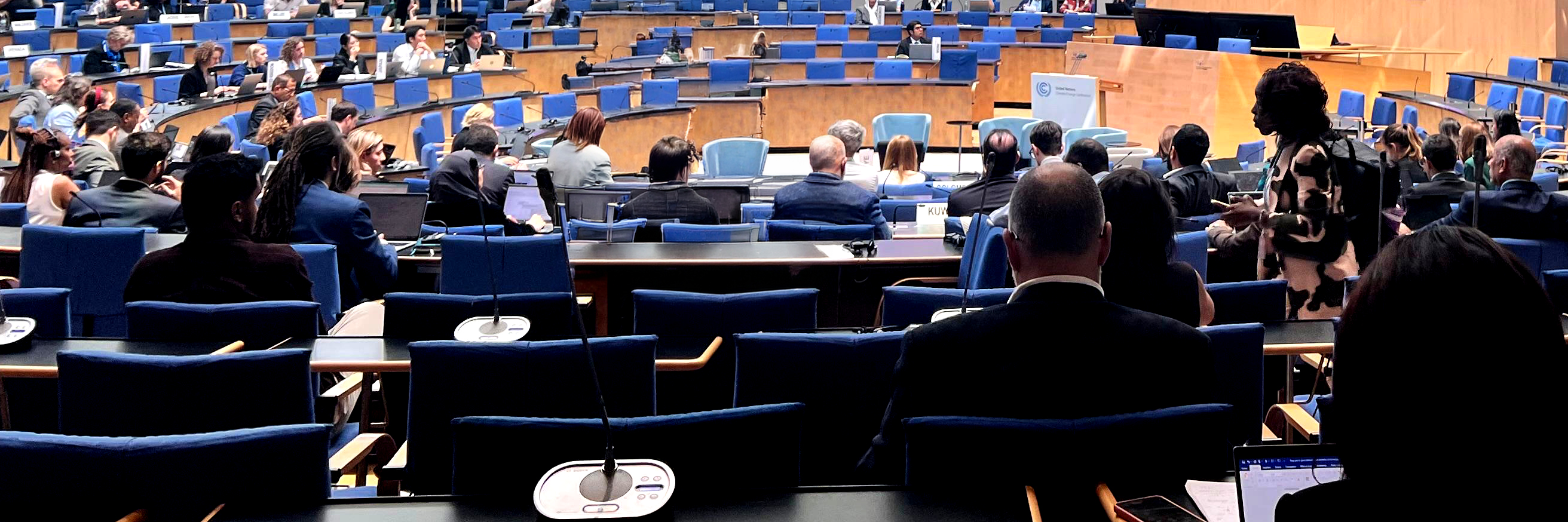
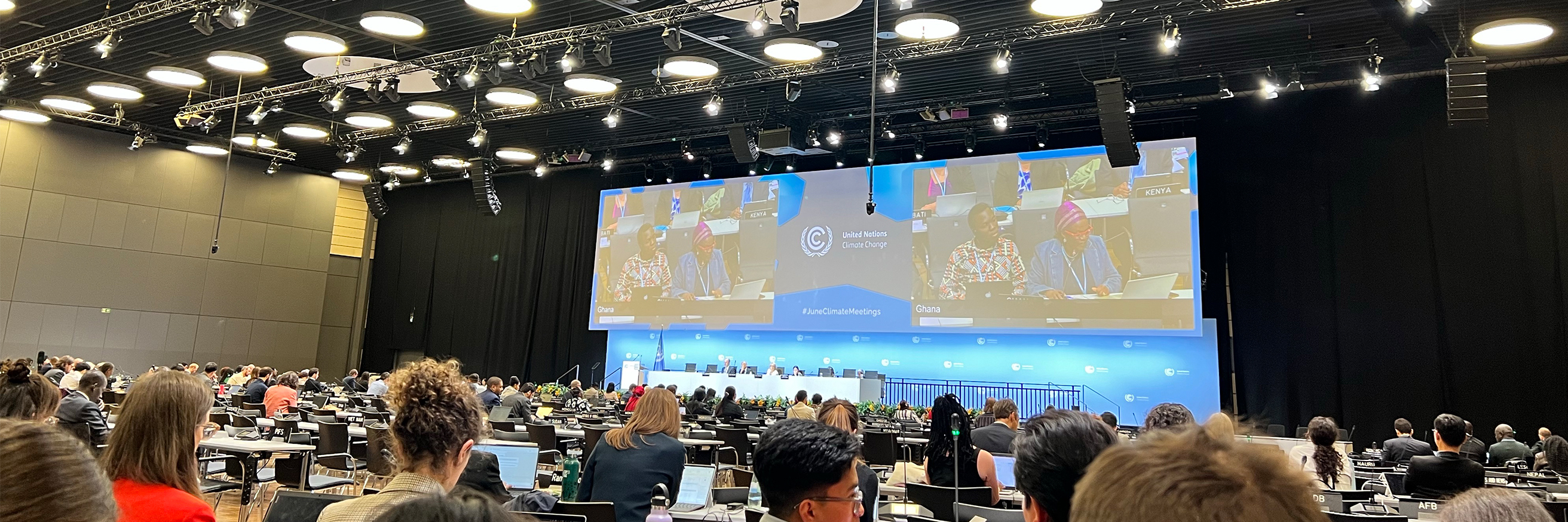
From 8 to 18 June, GI-ESCR participated in the 64th sessions of the UNFCCC Subsidiary Body for Implementation (SBI) and Subsidiary Body for Scientific and Technological Advice (SBSTA) in Bonn, Germany. The activity aimed to influence policy processes within the negotiation tracks at SB64 and strengthen coordination with broader civil society.
Putting Tax Justice on the Climate Finance Agenda
On climate finance, GI-ESCR aimed to introduce fiscal policies and cooperation on fiscal matters as tools necessary to gather public revenue and comply with climate finance commitments under the Paris Agreement. To do so, it engaged in the Veredas Dialogue’s discussions on nationally determined approaches and the international dimensions of implementing Article 2(1)(c) of the Paris Agreement, as well as its complementarity with Article 9.
GI-ESCR contributed to discussions within the Veredas Dialogue by foregrounding fiscal policy and the UN Tax Convention process as concrete tools for meeting climate finance obligations under Article 2(1)(c) of the Paris Agreement. The immediate objective was to introduce fiscal policy and international tax cooperation, including the UN Tax Convention process, within these discussions. By foregrounding that approximately USD 492 billion per year is lost to global tax abuse, the organisation aimed to reframe the climate finance gap as a matter of political will rather than resource scarcity and to build pressure for explicit mandates to utilise fiscal policy and cooperation as means to comply with climate finance commitments under the NCQG.
On climate finance, GI-ESCR partnered with REDFIS, the ‘Red Latinoamericana y Caribeña por un Sistema Financiero Sostenible’, to engage in the Veredas Dialogue. Together with REDFIS partners, we participated in ‘Reforming the International Financial Architecture for Climate’ on 15 June. The side event explored how COP30 finance outcomes, including the Veredas Dialogue on Article 2.1.c, can advance international financial architecture reform while improving the quality of finance and supporting just transitions across increasingly interconnected global agendas.
GI-ESCR also co-organised ‘From Scarcity to Abundance: How Tax Justice Measures Can Deliver Public Climate Finance at Scale’, a side event on the relevance of tax justice to the UNFCCC process, alongside Oxfam, Global Witness, Stamp Out Poverty, War on Want, Rosa Luxemburg Stiftung and Heinrich Böll Stiftung. The event brought together experts, activists and negotiators, and focused on how tax justice measures can help deliver public climate finance at the scale required.
Advancing a Rights-Based Just Transition
GI-ESCR aimed to influence negotiations under the Just Transition Work Programme, particularly the expected decision on the architecture, governance and functions of the new Just Transition Mechanism. The organisation also sought to inform discussions on the future of the Work Programme, including its possible renewal, and the development of key messages or principles based on the Dialogues held during regional climate weeks.
GI-ESCR further aimed to shape outcomes from the Dialogues on food security, agriculture and oceans, ensuring that this year’s resolution reflects rights-based and gender-just approaches.
At SB64, negotiations addressed both the substantive outcomes of the Just Transition Work Programme Dialogues, including the Yeosu Dialogue on food security, agriculture and oceans, and the architecture, governance and functions of the new mechanism. GI-ESCR engaged to ensure that emerging text and key messages are grounded in human rights standards and gender justice principles, and that the mechanism's design is capable of advancing just transitions on the ground and reflects the needs and priorities of frontline communities.
Working Through Feminist and Civil Society Coalitions
On just transition, GI-ESCR’s primary institutional home for advocacy was the Women and Gender Constituency, of which the organisation is a member. In that space, GI-ESCR worked alongside fellow feminists to advance shared advocacy priorities in the Just Transition Work Programme negotiations.
The organisation engaged directly in the negotiations through the Women and Gender Constituency, drafting interventions for delivery in contact groups and contributing to the drafting of advocacy positions, including a draft text for the resolution on the establishment of the mechanism and draft key messages deriving from the Yeosu Dialogue on food systems.
GI-ESCR brought legal and human rights analysis to bear on the emerging text for the Just Transition Mechanism, advocating for rights-based governance architecture. It also contributed to corridor diplomacy and bilateral engagements and helped mobilise the joint civil society action on 17 June that applied final pressure on the just transition negotiations.
At the opening plenary of SB64, GI-ESCR’s Programme Officer on Climate and Environmental Justice, Maggie Rochi, delivered the Women and Gender Constituency's opening statement. Speaking on behalf of the constituency, she called for feminist climate justice, the safeguarding of progressive language, resistance to regression on hard-won commitments and the fulfilment of ICJ-affirmed legal obligations, including the obligation for developed countries to provide climate finance. She also called for the establishment of the Belém mechanism, the second phase of the Just Transition Work Programme and the effective implementation of the Belém Gender Action Plan, while urging governments and institutions to adopt a gender-transformative approach to ACE and ensure that the Global Goal on Adaptation reflects the lived realities and needs of women.
Watch Maggie deliver the WGC statement here.
Progress and Next Steps
GI-ESCR engaged to advance the development of a Just Transition Mechanism with a strong framework to enhance international cooperation, technology transfers and enable transition pathways grounded in human rights and gender equality. The engagement aimed to influence the institutional architecture, functions and participation within the mechanism so that it is capable of supporting implementation at the national level.
SB64 fell short of the progress sought, with States stalling on the Terms of Reference for the review of the Just Transition Work Programme. However, a last-minute addition to the draft conclusions, paragraph 10 of the Draft conclusions proposed by the Chairs, secured the possibility of intersessional work prior to COP31, creating a critical window to advance technical and political work towards the establishment of the mechanism.
Across two weeks of engagement, GI-ESCR sought to contribute to stronger civil society coordination and a unified movement voice for sustained advocacy within the UNFCCC. It also sought to ensure that the design of the Just Transition Mechanism reflects the needs and priorities of frontline communities and to support the use of fiscal policy and international tax cooperation as tools to gather public revenue and comply with climate finance commitments under the Paris Agreement.
Related Articles
SITEMAP
TAKE ACTION
NEWSLETTER