
Accessibility Tools

Select your language

On the Ground

Explore our work with partners, globally and locally, to tackle social and economic injustice using a human rights lens.

From Tax Rules to Public Services and Care: GI-ESCR Convenes Three-Part Training Series on the UN Tax Convention

From Tax Rules to Public Services and Care: GI-ESCR Convenes Three-Part Training Series on the UN Tax Convention

  • Rights realization: In a scale from 0 (note evident) to 5 (transformative), to what extent does this policy or law expand ESCR?: 1

From 14 to 16 July 2026, GI-ESCR led a series of three online trainings to equip civil society organisations, public services unions, human rights advocates and care movements to engage with negotiations on the UN Tax Convention. Developed in collaboration with Public Services International (PSI), the initiative connected global tax rules with governments’ capacity to finance education, health, water, transport, housing, social protection and care. The sessions sought to make a complex international process accessible and actionable for organisations rooted in struggles for rights and public services.


Building Political Capacity for the Negotiations


The series was built around a shared premise: decisions about international tax cooperation directly affect the resources governments can mobilise for public services and human rights. The claims that that there is ‘no money’ for public services were challenged, highlighting how tax abuse by multinational corporations and weaknesses in the international tax system deprive governments of public revenue.

Participants first considered the political stakes of the Convention, then examined its legal architecture, the development of the negotiations and the issues that will shape its outcome. The intention was for participants to leave with a clear sense of why the process concerns their work and how they could engage.

Across all three sessions, there was a focus on four common areas:

  1. What the UN Tax Convention is and how the negotiations have developed
  2. How international tax rules affect public services financing in participants’ own countries
  3. What is at stake in debates on governance and transparency
  4. How civil society can act at local, national and global levels

The trainings became spaces in which participants could apply a shared political and legal framework to different regional and thematic contexts. 


Connecting Tax Justice With the Care Agenda


The first session, ‘Tributar para el bien común: Comprendiendo el uso de la Convención Fiscal de la ONU para los cuidados’ ('Taxing for the Common Good: Understanding the Use of the UN Tax Convention in the Context of Care'), took place on 14 July. It brought together non-governmental organisations, grassroots groups, unions and researchers working on care and support, gender equality, human rights and public services, with a particular focus on Latin America and the Caribbean and Africa.

The session linked unpaid or poorly paid care work, public services, social protection and gender-responsive budgeting with international tax governance. Its central argument was that sustainable care systems require public investment and that the availability of those resources is shaped by international tax rules. For grassroots and movement organisations, engagement with the Convention offers a way to contest decisions over power and public resources that eventually affect budgets for care policies and systems.

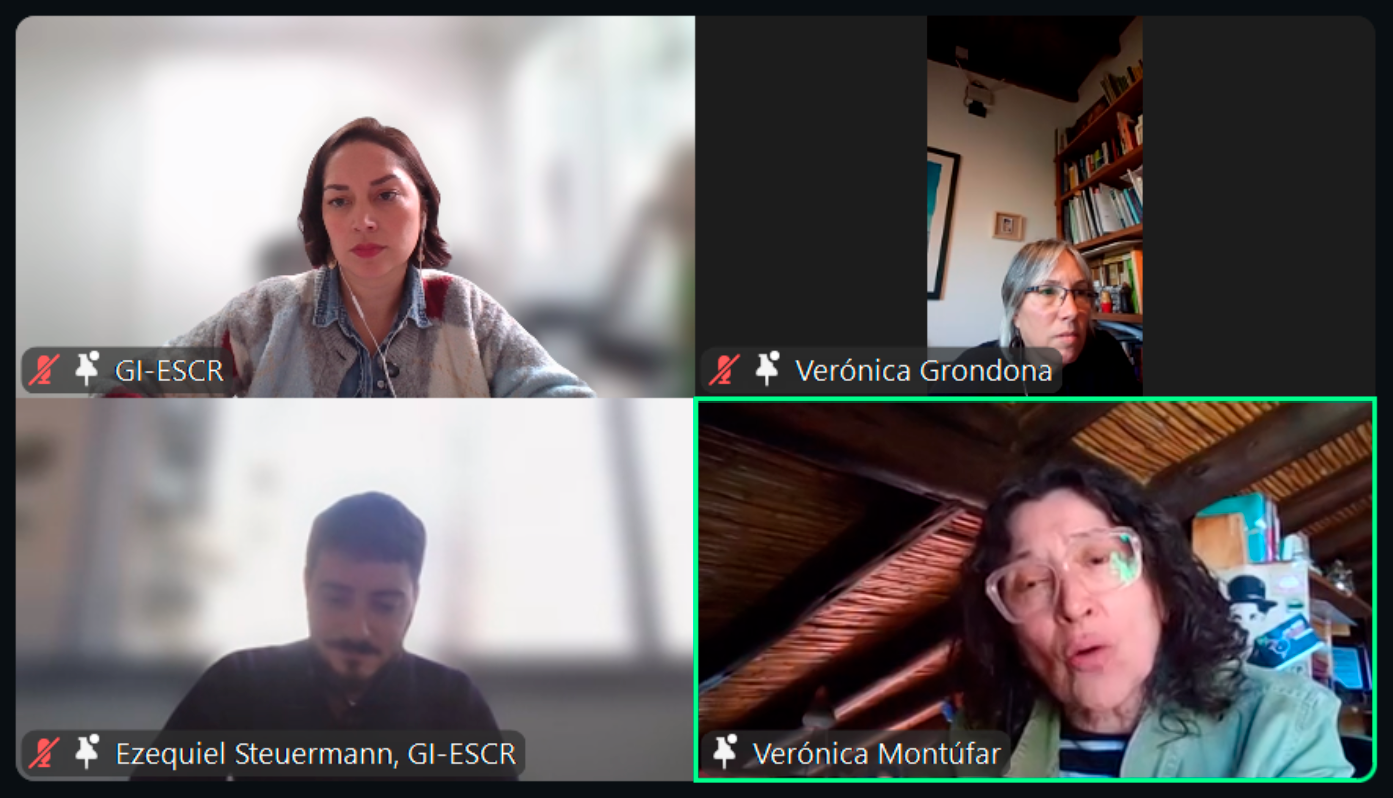
Verónica Montúfar of PSI examined why the care movement should engage with taxation. GI-ESCR’s Ezequiel Steuermann explained the origins and structure of the Convention and the status of negotiations, while Verónica Grondona of ICRICT focused on transparency and inclusive, effective governance. Her contribution addressed the exchange of information between countries and the identification of affiliates linked to individual and corporate taxpayers as part of efforts to prevent capital flight.

Participants left with a stronger understanding of why the Convention emerged, how international tax rules affect care financing, the main opportunities and risks in the negotiations and the ways care advocates can engage in national, regional and multilateral debates. 


Watch 'Taxing for the Common Good:

Understanding the Use of the UN Tax Convention in the Context of Care' here.


Preparing Advocates in Latin America and the Caribbean


On 15 July, 'Tributar para el bien común: Impulsar los servicios públicos en América Latina y el Caribe mediante la Convención Fiscal de la ONU' ('Taxation for the Common Good: Promoting Public Services in Latin America and the Caribbean Through the UN Tax Convention') took place. It was designed for civil society staff working on public services, public services union leaders, policy researchers and staff from human rights institutes. These groups were targeted because their work places them in a position to connect the negotiations with national advocacy on rights and public financing.

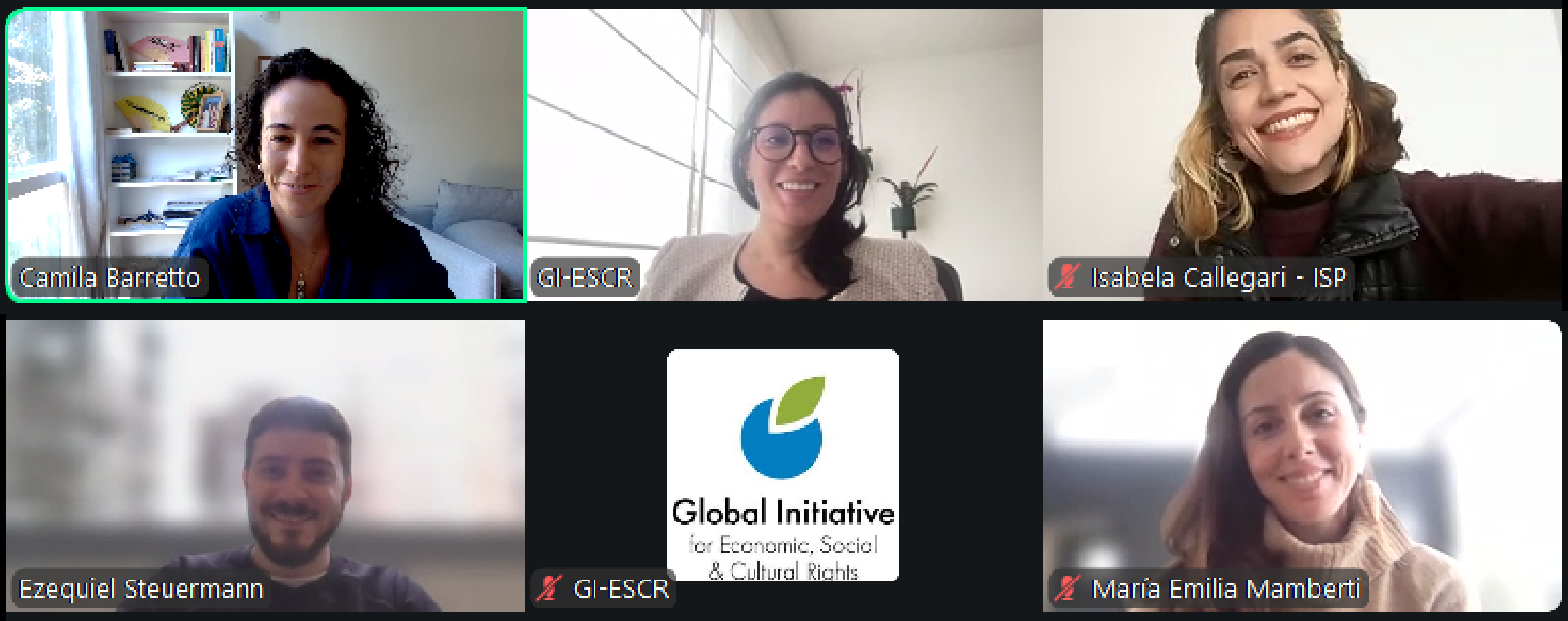
Programme officers Juana Barragán Díaz and Ezequiel Steuermann and Executive Director Camila Barretto Maia contributed on behalf of GI-ESCR. Isabela Callegari of PSI presented the Convention’s political relevance for public services, placing the discussion in the context of fiscal austerity and the need for mobilisation to secure adequate financing.

María Emilia Mamberti of LATINDADD examined two of the substantive issues most directly connected to public services financing: governance and transparency. She explained that governance determines where the authority to set international tax rules sits and whether all countries have an equal voice. Her intervention on transparency centred on a clear proposition: ‘You cannot tax what you cannot see'.

Participants identified possible steps including narrative change, national advocacy, engagement with governments on the Convention, preparation for future COPs and further organisational capacity-building. 


Watch 'Taxing for the Common Good:

Promoting Public Services in Latin America and the Caribbean Through the UN Tax Convention' here.


Building a Cross-Sectoral Base for Engagement in Africa


The final training, ‘Taxing for the Common Good: Advancing Public Services in Africa Through the UN Tax Convention’, took place on 16 July. It convened civil society organisations, unions, human rights organisations and institutions working across agriculture and food systems, education, energy, economic justice and social protection, health, transport, housing and water.

The session addressed a gap in civil society familiarity with the technical and procedural aspects of the negotiations. It presented the Convention as an opportunity to move international tax rule-setting towards a more inclusive United Nations forum in which African countries can participate meaningfully. It also connected the negotiations with underfunded public services, illicit financial flows, tax abuse and an international tax system historically shaped with limited African input.

This audience was central because its members could connect global negotiations with sector-specific realities. Their work gives them direct knowledge of how constrained public revenue affects services and communities, as well as evidence and constituencies that can inform advocacy.

Everlyn Muendo of Tax Justice Network Africa provided the political context, framing the Convention in relation to fiscal sovereignty, African self-reliance, debt-based financing and the public resources lost through harmful tax incentives and excessive concessions.

Faith Lumonya of PSI addressed inclusive governance and transparency, including public country-by-country reporting and beneficial ownership transparency.

GI-ESCR speakers linked meaningful civil society participation in the process with the wider struggle to finance public services.


Watch ‘Taxing for the Common Good:

Advancing Public Services in Africa Through the UN Tax Convention’ here.


Collective Action Across Regions and Movements


The sessions were framed as the beginning of an advocacy process, with participants encouraged to develop narratives, engage governments, strengthen organisational capacity and coordinate across sectors. By building a shared understanding across regions and movements, the training series seeks to support sustained advocacy for a fairer international tax framework and the public resources needed to realise human rights, fund quality public services and build sustainable care systems.


Interested in our 'International Law at the UN Tax Convention' publication series?

Click here.

Related Articles

NEWSLETTER

Don´t miss any updates!

Image

Select your language

Social Media:

Log in

Climate and Environmental Justice

We have advanced rights-based and gender-transformative transition frameworks through research that centres the lived experiences of women and marginalised communities on the frontlines of extractive energy policies, promoting climate and energy frameworks attentive to the social and care-related impacts of transition pathways. We have developed a clear vision for a gender-just transition, firmly rooted in gender and human rights norms, establishing both the legal basis and the direction for the transformative changes our planet and societies urgently need. In particular, the ‘Guiding Principles for Gender Equality and Human Rights in the Energy Transition’, a collective effort built through online consultations, an in-person workshop and multiple rounds of revision with activists, practitioners and experts from around the world, outline a transformative vision for reshaping global energy systems through a human rights and gender equality lens.

Our work recognises that the climate emergency is both an existential threat and an opportunity to reimagine societies built on social, gender, economic and environmental justice. We ground our advocacy in feminist and intersectional principles, prioritising the agency and perspectives of communities in the Global South who have contributed the least to the climate emergency yet face its most devastating consequences. Central to our approach is the understanding that energy is not merely a commodity but a fundamental human right; essential for dignity, health, education, work and the realisation of countless other rights. We challenge approaches to the energy transition that risk replicating the harmful patterns of fossil fuel extraction and, instead, advocate for transformative policies that ensure human rights and gender equality as central to building climate-resilient societies rooted in dignity, justice and planetary well-being.

What's next?

We will continue to challenge approaches that treat energy transition as merely a technical shift, instead positioning it as an opportunity to reimagine economies and societies rooted in dignity for all, with particular attention to communities in the Global South who have contributed least to the climate emergency yet are most exposed to its worst effects.

We will connect community-level evidence and the lived experiences of those on the frontlines of extractive policies to national reform and global norm-setting, breaking down silos between human rights, gender, and climate movements, and advancing a shared vision that recognises just transitions as not only fundamental to achieving climate-resilient and sustainable societies, but as transformative pathways that advance social and gender equality, redistribute power and resources equitably, and ensure that energy systems serve the public good rather than profit.

We will mainstream rights-based and genderjust transition priorities in key multilateral spaces (particularly, within the Just Transition Work Programme and the to-be-developed Just Transition Mechanism, within the UNFCCC) to guarantee that just transitions are advanced at all levels.

We will also translate our work, through strategic advocacy, into at least two concrete policy wins, whether promoted, adopted, implemented, or scaled, in priority countries (Argentina, Brazil, Chile, Mexico, Colombia, South Africa, or Kenya), ensuring these policies align with human rights standards, centre gender equality, and reflect the needs and views of affected communities.

We will build momentum for the progressive recognition of the right to sustainable energy to shift dominant narratives away from purely extractive solutions that sideline gendered impacts, community participation, and Global South perspectives.

Economic Justice and Climate Finance

Our work has transformed the global discussion on fiscal policy in a more just, emancipatory and sustainable direction. Our approach has combined both high-level, expert contributions within decisionmaking circles, with bold, impactful work on narrative change with the general public.

We have been instrumental in the inclusion of human rights as a guiding principle of the future United Nations Framework Convention on International Tax Cooperation, a multilateral instrument with the potential of raising approx. USD 492 billion per year in public revenues currently foregone to global tax abuse. In the process leading to the ‘Compromiso de Sevilla’ decided at FfD4, we proposed and succeeded in creating a specific human rights workstream within the Civil Society Financing for Development Mechanism, which was critical to ensure that explicit commitments on the matter were included in the negotiating outcome. In a context of cutbacks in multilateral institutions, we have amplified the capacities of technical experts, providing rigorous technical support and leveraging our influence to ensure the enactments of groundbreaking standard-setting instruments, such as the 2025 UN Committee on Economic, Social and Cultural Rights Statement on Fiscal Policy and Human Rights, and the first ex oficio hearing on the Inter-American Commission of Human Rights on Fiscal and Economic Policies to Address Poverty and Structural Inequality, leading to an upcoming thematic resolution on the matter. We have also bridged the silos between multilateral tax discussions and climate finance debates, promoting ambitious financing commitments to increase international and domestic resource mobilisation during COP 28, 29 and 30.

At the regional level, our engagement with fiscal cooperation platforms such as the Platform for Fiscal Cooperation of Latin America and the Caribbean (PTLAC), where we are member of its Civil Society Consultative Council, and the African Anti-IFFs Policy Tracker, for which we participated in the pilot mission in Ivory Coast together with Tax Justice Network Africa (TJNA), have been critical in cementing a growing engagement between tax administrations and ministries of finance with international legal experts, exploring actionable and transformative initiatives, such as the taxation of high-net-worth individuals, beneficial ownership registries and corporate countryby-country reports, to be implemented at the international level.

At the local level, our interventions in fiscal reform debates in Chile, Brazil, Colombia and Nigeria have contributed to shaping legislative outcomes in a more progressive, rights-compliant direction.

As for our leadership in narrative change, we have a measurable track record in delivering tailored, innovative campaigns which have decisively expanded economic justice constituencies by appealing to a broader tent. In Latin America and the Caribbean, we created the ‘Date Cuenta’ campaign, coordinating over 40 organisations across civil society to deliver plain language, innovative messaging connecting progressive fiscal reforms to the financing of health, education and social protection. ‘Date Cuenta’ generated over 55 original campaign messages that were tailored to the realities of seven priority countries (Argentina, Chile, Colombia, Mexico, Paraguay, Peru and Honduras) and disseminated in Spanish, Portuguese and English. In doing so, we convened more than 65 online co-creation workshops with partners, coordinating a unified communications strategy which combined digital outreach, press and media coverage, and collaboration with influencers. Ultimately, ‘Date Cuenta’ resulted in more than 60,000 interactions on social media, coverage in major regional and international media outlets, including El País, Deutsche Welle, Bloomberg and France 24, and the participation of at least 63 social media influencers through 58 dedicated publications. In collaboration with Fundación Gabo and the Friedrich Ebert Stiftung, we also organised a two-day workshop in Bogota with 20 journalists from 13 countries, building a regional network trained in a human rights-based approach to fiscal policy that has since generated published media coverage on outlets such as La Diaria, Ciper, El Diario Ar and Milenio. Through ‘Date Cuenta’ and our regional advocacy, we strengthened civil society engagement in key processes, including the Financing for Development track and FfD4, co-organised highlevel dialogues with states and civil society from Latin America and Africa.

What's next?

We will shape the UN Tax Convention and its Protocols so they embed human rights principles, and we will stay engaged through follow-up processes (including the expected Conference of the Parties) to support effective implementation. We will keep linking tax and climate finance so that new resources mobilised through fiscal cooperation are channelled to adaptation, mitigation, and loss and damage, in line with UNFCCC commitments.

Public Services for Care Societies

We have translated participatory research into accountability and policy outcomes.

In Ivory Coast, our work with Mouvement Ivoirien des Droits Humains and affected communities since 2023 exposed how privatisation and lack of accountability restrict access to quality healthcare. It contributed to the closure of 1,022 illegal private health centres, an executive instrument strengthening the regulation of private hospitals across the country, and the creation of a permanent complaints management committee in healthcare through a bylaw issued by the prefect of Gagnoa. Partners engaged through this process also advanced concrete improvements at facility level: members of the Gagnoa Midwives Association who took part in the participatory action research pooled resources to renovate the neonatal unit of the Regional Hospital, and the Director of the Gagnoa General Hospital launched an action plan to expand services and improve patient reception, with the facility receiving the award for best hospital in the country in 2025.

In Kenya, our research with the Mathare Education Taskforce documented the absence of public schools and the expansion of private provision, evidencing impacts on households and caregivers and strengthening demands for free, quality public education. This work contributed to stronger community agency and collective organisation, alongside ongoing strategies ranging from communications to litigation to secure a public school in the area, some involving GI-ESCR and others led independently.

Across Africa, this work is complemented by a multi-country study examining the human rights implications of austerity in education and health, including how regressive fiscal policies, rising debt burdens and persistent underinvestment undermine the financing and delivery of public services.

In Latin America, from 29 November to 2 December 2021, over a thousand representatives from over one hundred countries, from grassroots movements, advocacy, human rights, and development organisations, feminist movements, trade unions, and other civil society organisations, met in Santiago, Chile, and virtually, to discuss the critical role of public services for our future. Following the meeting, the Santiago Declaration on Public Services was adopted to demand universal access to quality, gender-transformative and equitable public services as the foundation of a fair and just society.

We are currently advancing work on care systems, linking public services and fiscal justice through integrated research, advocacy and communications, including a regional campaign framing care as a collective responsibility requiring sustained public investment.

What's next?

In Ivory Coast, we will evaluate and strengthen the complaints management committee and position it as a replicable model for other health facilities. In Kenya, we will support the Mathare community to co-design a model public school for Mabatini and Ngei wards, grounded in human rights standards. Building on our multi-country austerity study, we will drive national advocacy on financing for education and health: advancing reforms in Ghana; launching a fiscal policy and public services financing agenda in Kenya through the CESCR process and targeted coalition work; and, in Nigeria, using the new tax acts in force since 1 January 2026 to catalyse a national accountability campaign for adequately funded, quality public services. In Latin America, we will amplify locally led care pilots across 8 countries and turn lessons into influence—advancing care policies that strengthen care organisations, protect care workers’ rights, support unpaid caregivers, include disability and family networks, and redistribute care more equitably.