

Don´t miss any updates!


ESC Rights Update from Geneva: 64th session of the Committee on Economic, Social and Cultural Rights
From 24 September - 12 October 2018, the Committee on Economic, Social and Cultural Rights (CESCR) held its 64th session in Geneva.
During the session, on 5 October, the Committee held its regular Meeting with States Parties which involved a discussion of the work of the Committee and States sharing their views on its work. The discussion addressed the simplified reporting procedure, the 2020 review of treaty body mechanisms, and the election of Committee members.
On the simplified reporting procedure, so far New Zealand and Spain have completed their reviews under this procedure and 10 more States (Bulgaria, Belarus, Belgium, Norway, Ukraine, Austria, Chile, Finland, Italy, Mongolia) are at various stages of the process of reporting under the simplified reporting procedure. The Committee Chair confirmed that in future this procedure will be offered to other States that have a longer reporting history.
Webcast
If you’re interested in watching any of the public meetings of the session, you can watch the UN webcast HERE.
State Reporting Procedure
The Committee considered the State Party reports for the following States:
Argentina, Cabo Verde, Germany, Mali, South Africa, Turkmenistan
For Cabo Verde, South Africa and Mali, the Committee was reviewing their Initial Reports and therefore 9 hours of meeting time was allocated for the Dialogues with those States.
The Committee has published its Concluding Observations for all States reviewed HERE.
Pre-session
The Committee’s pre-sessional Working Group met from 15 – 19 October 2018, and it adopted:
Lists of Issues in respect of Denmark and Switzerland; and Lists of Issues Prior to Reporting for Belarus, Belgium, Norway, Ukraine.
The Lists of Issues and Lists of Issues Prior to Reporting are available HERE.
Communications under the OP-ICESCR
The Committee had, as of the start of the session, formally recorded 57 communications. Fourteen of those communications have been declared inadmissible, 37 are still pending, and four have been decided on the merits.
During their meeting with States Parties, Committee members noted that despite the increase in the number of Communications, the resources of the Petitions Unit had not increased commensurately. Therefore, if the number of communications received by the Committee continues to grow, it will develop a backlog, like some other treaty bodies, unless additional resources are directed to the Petitions Unit to enable it to process all communications in a timely manner.
One communications was finalised by the Committee at this session and it was found inadmissible: Baltasar Salvador Martínez Fernándezv Spain (E/C.12/64/D/19/2016) available HERE (only in Spanish at this stage).
Baltasar Salvador Martínez Fernándezv Spain (E/C.12/64/D/19/2016)
This case concerned attempts by a corporate mortgagee to evict the mortgagor/occupier for default on the mortgage and to evict other subsequent occupiers who claimed they had no other place to live. The occupiers were convicted of the crime of ‘usurpation’ (encroaching on another’s property rights).
The author alleged that Spain’s eviction laws and usurpation laws are inconsistent with the ICESCR and specifically with the right to adequate housing in article 11. Specifically, he claimed that the criminalisation of illegal occupation of uninhabited housing, for the purposes of using as a dwelling, where there is no other affordable housing available, is contrary to the right to adequate housing.
The Committee said the author had not demonstrated deficiencies in the legal decisions and that it was beyond the Committee’s competence to review the Court’s interpretation of the State’s laws. Further, the author had not provided information or evidence to demonstrate that his conviction for usurpation affected his right to adequate housing.
Therefore, the Committee found that the author had not sufficiently substantiated his claims under article 11 of the Covenant and therefore the communication was inadmissible pursuant to article 3(2) of the Optional Protocol.
Ratification of the Optional Protocol
Venezuela became the 24th State Party to ratify ratification the Optional Protocol to the ICESCR. This means that communications under the OP-ICESCR can now be brought against Venezuela in respect of allegations of violations of the Covenant by Venezuela.
Unfortunately Venezuela has not accepted the Inquiry procedure under Article 11 of the Optional Protocol and therefore the Committee does not have jurisdiction to undertake an Inquiry in respect of Venezuela.
Thematic areas of work
Day of Discussion - the right to science
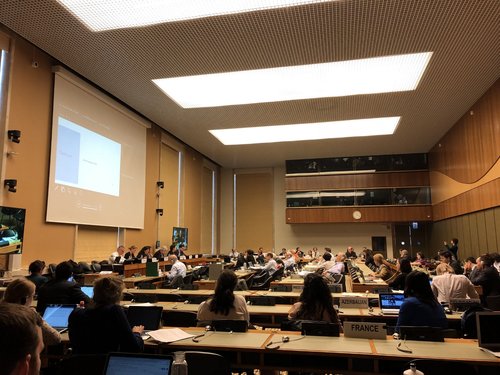
A Day of General Discussion on Article 15 of the Covenant, was held on 9 October. The discussion addressed the right to enjoy the benefits of scientific progress and its applications and on other provisions of article 15 and the relationship between science and economic, social and cultural rights. The discussion was part of the process towards the development of a new general comment on this topic which will provide guidance to States on the measure to be adopted to ensure full compliance with article 15.
The Day of General Discussion was open to participation by all stakeholders by attending the discussion and intervening from the floor or making a written submission. There was participation from a range of stakeholders, including States and civil society. However, the discussion did not attract the same level of participation as we saw at the last Day of Discussion for General Comment 24 on ESC rights and business activities.
The Co-Rapporteur for the proposed general comment, Mr Mikel Mancisidor, introduced the discussion, explaining the process so far and the need for a general comment. He noted that this right had not been frequently addressed in State Party reporting. Four panels of speakers then addressed the Committee on the normative contents of the right to enjoy the benefits of scientific progress and its applications, the relationship between this right and other rights, possible limitations on this right and the scope of States’ obligations and other actors’ obligations and responsibilities.
The precise focus of the general comment remains open. Therefore the discussion on 9 October was broad ranging and the Committee will use the inputs to determine what should be the specific focus of the general comment.
The Committee is aiming to adopt a new general comment at its sixty-sixth session in autumn 2019. Once a draft is developed, it will be made publicly available and written submissions from all stakeholders will be invited.
For further information see HERE.
Statement on ESC rights and climate change
Recognising the very significant link between climate change and economic, social and cultural rights, the Committee issued a Statement in response to the publication of the special report of the Intergovernmental Panel on Climate Change, on the impact of global warming of 1.5°C above pre-industrial levels.
In the Statement the Committee briefly outlined the well-documented harms to economic, social and cultural rights, caused by climate change and confirmed that ‘a failure to prevent foreseeable human rights harm caused by climate change, or a failure to mobilize the maximum available resources in an effort to do so, could constitute a breach of this obligation.’
In discussing the human rights duties of States, the Committee reminded States that their Covenant obligations extend to populations outside their territories and to obligations of international assistance and cooperation, which relate to climate finance and the transfer of green technologies from high-income States to developing States. It also noted that States’ declared Nationally Determined Contributions (pursuant to the Paris Agreement) are inadequate to avoid the most severe impacts of climate change:
‘In order to act consistently with their human rights obligations, the NDCs should be revised to better reflect the « highest possible ambition » referred to in the Paris Agreement (article 4.3).’
Further, the Committee noted that the implementation guidelines for the Paris Agreement, which will be agreed by States at the next UNFCC Conference of the Parties to be held in Katowice in December, ‘… should require from States that they take into account their human rights duties in the design of the NDCs. This implies acting in accordance with the principles of gender sensitivity, participation, transparency and accountability; and building on local and traditional knowledge.’
Highlighting the scale and urgency of the task confirmed in the 1.5°C report, the Committee said ‘A fundamental shift in the global energy order is urgently required from hydrocarbon to renewable energy sources, in order to avoid dangerous anthropogenic interference with the climate system and the significant human rights violations that such interference would cause.’
In conclusion, the Committee affirmed its continuing role on this topic:
‘the Committee shall continue to keep under review the impacts of climate change on economic, social and cultural rights, and provide States guidance as to how they can discharge their duties under the International Covenant on Economic, Social and Cultural Rights in the mitigation of climate change and adaptation to its unavoidable effects.’
This is a very important and timely Statement by the Committee which provides clear guidance on its approach to the issue of climate change and the importance of the 1.5°C temperature goal, from a human rights perspective. It also speaks directly to States as they meet in Katowice in December to adopt guidelines which will explain how the Paris Agreement is to be implemented, reminding them of how their human rights obligations apply in that context.
Elections
Following the April 2018 elections for CESCR membership, 2 seats remained vacant – 1 seat for Asia and 1 seat for Latin America and the Caribbean.
In July 2018 the Economic and Social Council held a further election in respect of those 2 vacant seats. Ms Karla Vanessa LEMUS de VÁSQUEZ from El Salvador was elected to fill the third seat for Latin America and the Caribbean.
Since no nominations were received in respect of the vacant Asian seat, that seat remains vacant. The ECOSOC decided to postpone the election of one member from the Asia-Pacific States but did not specify when it would hold a further election for that seat. It is assumed that if any nominations are received, a further election will be held when the ECOSOC sits in December 2018.
Therefore on 1 January 2019, 3 new members will commence their terms with the Committee:
-
Mr Asraf Ally Caunhye from Mauritius
-
Mr Peters Sunday Omologbe Emuze from Nigeria
-
Ms Karla Vanessa Lemus de Vásquez from El Salvador
The following members will be stepping down from the Committee on 31 December 2018:
-
Mr Azzouz Kerdoun from Algeria
-
Mr Chandrashekhar Dasgupta from India
-
Ms Maria Virginia Bras Gomes from Portugal
-
Mr Clément Atangana from Cameroon
Unfortunately the gender balance on the Committee remains poor. From 1 January 2019 the Committee will be comprised of 17 members, of which 5 are female and 12 are male. States should be very concerned by this gender imbalance on a United Nations human rights treaty body, particularly given the Committee’s mandate to monitor implementation of States’ obligations to ensure the equal right of men and women to the enjoyment of all economic, social and cultural rights.
Further information on the elections is available HERE.
Next Session
The sixty-fifth session of the Committee will be held from 18 February – 8 March 2019 during which the Committee will consider the reports of:
Bulgaria, Cameroon, Estonia, Kazakhstan, Mauritius, Slovakia
The deadline for civil society submissions in respect of the review of these countries is 7 January 2019 (and 25 January at the latest).
The Programme of Work for the 65th session (including dates for the Dialogues) is not yet available but will be posted HERE in the coming weeks.
The 65th session will be followed by a Pre-session from 11 to 15 March at which the pre-sessional Working Group of the Committee will prepare:
-
Lists of issues for Ecuador and Israel; and
-
Lists of Issues Prior to Reporting for Austria, Chile, Finland, Italy and Mongolia.
The deadline for civil society submissions in respect of these countries is 14 January 2019.
*NOTE: Sénégal may be added to the pre-session countries. Also, Italy may be moved to a later pre-session. Please check the Committee’s website for these changes.
Yemen and Sénégal are now the only States listed for ‘future sessions’ and it is not expected that the review of Yemen will proceed soon given the on-going conflict in that country. It is concerning that there are not other States listed for future sessions as this suggests that the Committee has not received State reports from many other States, despite the fact that many State reports are due or overdue.
From 24 September - 12 October 2018, the Committee on Economic, Social and Cultural Rights (CESCR) held its 64th session in Geneva.
Related Articles
SITEMAP
TAKE ACTION
NEWSLETTER