

Don´t miss any updates!

ESC Rights Updates from Geneva: 41st session of the UN Human Rights Council (June/July 2019)
This Update aims to provide a summary of the initiatives regarding economic, social and cultural (ESC) rights at the 41st session of the Human Rights Council (June/July 2019). It provides information about:
Right to education
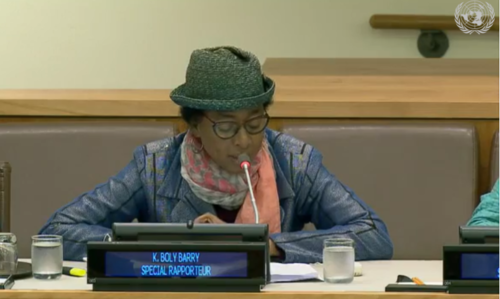
The report of the Special Rapporteur on the right to education addresses the implementation of the right to education and Sustainable Development Goal 4 in the context of the growth of private actors in education (A/HRC/41/37).
The report starts with highlighting the crucial importance of States implementing the 2030 Agenda for Sustainable Development, and the Education 2030 Agenda, respecting their international human rights obligations to contribute to the full realization of the right to education for all without discrimination. The Special Rapporteur points out that states have the legal obligation to use the maximum of their available resources to deliver free, quality and public education for all, which is a necessary condition for complying with Sustainable Development Goal 4.
The report stresses the changes experienced by educational systems worldwide due to the sudden increase in the involvement of private actors at the primary and secondary levels, on scales never seen before. By way of example, the number of private schools in Kenya increased 2,216%, between 1998 and 2013. Similarly, in Morocco ‘the percentage of private enrolment at the primary level has more than tripled in less than 15 years from 4 per cent in 1999 to 14 per cent in 2013’. According to the Special Rapporteur, this phenomenon may have adverse effects on some elements of the right to education and SDG 4, such as the principle of ‘free’ and ‘equitable’ primary and secondary education, and the principle of equality between girls and boys.
The Special Rapporteur also identifies different ways in which private actors can get involved in education, raising particular concerns about the participation of for-profit and commercial institutions on the right to education. Since commercial institutions treat children as consumers and education as a commodity for growing profits, they jeopardize the right to education and threaten to ‘damage democracy, social cohesion and stability in developing countries’. Similar concerns are also presented in relation to public-private partnerships and the role of bilateral and multilateral donors in supporting private actors.
In this context, the report notes that the human rights framework and the newly adopted Abidjan Principles have a key role to play in regulating private schooling and reinforcing quality public education. The Special Rapporteur applies the Abidjan Principles to four issues which are relevant to implementation of SDG 4: (i) the State obligation to fund and provide public education; (ii) the State obligation to regulate and monitor private actors; (iii) public-private partnerships; and (iv) the role of bilateral and multilateral donors.
The Special Rapporteur concludes that ‘international human rights law requires States to provide quality, public education’ and while private actors can be involved in the educational field under certain circumstances and standards, the State must ensure ‘that its existence does not jeopardize the role of the State as educational guarantor; that it is not exploited to increase inequality or injustice; and that the recipients of private education are its principal beneficiaries’. States are also required to reinforce public education systems and not to segment them by generating material inequalities. She recommends that States use the Abidjan Principles as a useful guiding tool for the implementation of SDG 4 and the right to education.
Resolution on the right to education
Portugal presented its annual resolution on the right to education which the Council adopted by consensus (A/HRC/RES/41/16). The resolution repeats many of the points from the 2018 resolution but also takes up the topic of the Special Rapporteur’s report, calling on states to ‘implement the 2030 Agenda for Sustainable Development, including Sustainable Development Goal 4, in accordance with human rights law and standards, in order to ensure inclusive and equitable quality education and to promote lifelong learning opportunities for all’. Specifically the Council urges States to take measures such as: ‘Developing adequate standards and regulations for the involvement of private educational actors and institutions in education, and providing the resources necessary to implement these regulations’ including an accountability framework. In the preambular paragraphs it notes ‘the development by experts of guiding principles and tools for States, such as the Abidjan principles on the human rights obligations of States to provide public education and to regulate private involvement in education’. It also asks States to ‘support research and awareness-raising activities to better understand the wide-ranging impact of the commercialization of education on the enjoyment of the right to education ’ and to assess the short and long-term systemic impact of private educational institutions and consider regulatory responses.
Extreme poverty and human rights
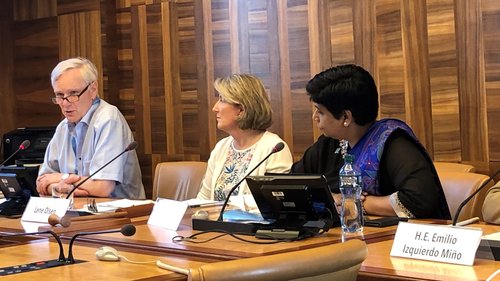
The annual report to the Human Rights Council of the Special Rapporteur on extreme poverty and human rights, Mr Philip Alston, this year focused on climate change and the catastrophic threat it poses to the rights of persons living in poverty (A/HRC/41/39). The Special Rapporteur sounds the alarm bell, describing the scale of the problem and the significant and serious consequences for human rights. He underlines the fact that poor countries and regions and the places that poor people live and work, will be the hardest hit. Climate change will exacerbate poverty and ‘threatens to undo the last fifty years of progress in development, global health and poverty reduction’. It will also exacerbate inequality, since the richest will have the greatest capacity to adapt and cope with climate change. He describes climate change as ‘an unconscionable assault on the poor’.
The Special Rapporteur notes that ‘Although climate change has been on the human rights agenda for well over a decade, it remains a marginal concern.’ He surveys some important work by the Human Rights Council, the OHCHR and the Human Rights Treaty Bodies, but calls for ‘bold and creative thinking from the human rights community’ and new approaches which transcend traditional human rights techniques and recognise the urgency of transformational change, the threats to democracy and civil and political rights and the need for the revitalisation of economic and social rights. He warns that ‘human rights might not survive the coming upheaval’.
The Special Rapporteur explains that ‘genuinely transformative change is needed both in the ways societies and economies are currently structured and in the human rights regime’. He describes the pathways to transformation, highlighting the role of the private sector, particularly the fossil fuel industry, with the complicity of the State, in driving climate change and undermining attempts to understand and address it. He cautions that in identifying climate solutions ‘overreliance on profit-driven actors would almost guarantee massive human rights violations, with the wealthy catered to and the poorest left behind.’ The report also highlights the importance of a just and managed transition of the economy, which includes protection of labour rights, support related to job losses, social protection and a robust social safety net, and the realisation of economic and social rights such as housing, food, water and sanitation.
The report concludes by outlining some steps for the human rights community to take to face up to, and tackle, the climate emergency and its inevitable impacts on human rights.
In addition to his thematic report, the Special Rapporteur presented is country visit reports on the United Kingdom (A/HRC/41/39/Add.1) and Laos (A/HRC/41/39/Add.2).
Right to Health
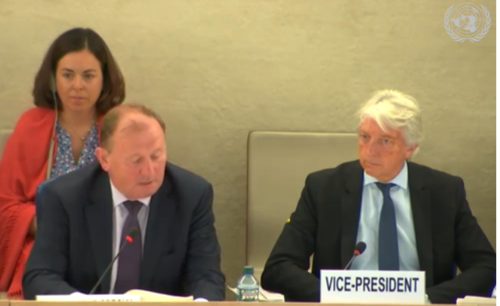
The report of the Special Rapporteur on the right of everyone to the enjoyment of the highest attainable standard of physical and mental health, Mr. Dainius Pūras, examines the role of the social and underlying determinants of health, on the realization of the right to mental health (A/HRC/41/34).
The report begins by highlighting the need to incorporate a human-rights based approach to mental health that goes beyond the individualistic approach which focuses on prevention of diseases. The Special Rapporteur stresses that Sates have human rights obligations to produce and maintain the necessary conditions that favor individual well-being and allow everyone to live a life in dignity and equality. He points out that the right to health encompasses both the right to health care and the social determinants of health, which demand ‘social connections’ and ‘structural interventions’ well beyond the health sector. In this context, the social determinants of health and human rights must intersect not only in theory but in practice and must play a critical role in the promotion of health-care.
The Special Rapporteur explains that: ‘good mental health and well-being cannot be defined by the absence of a mental health condition, but must be defined instead by the social, psychosocial, political, economic and physical environment that enables individuals and populations to live a life of dignity, with full enjoyment of their rights and in the equitable pursuit of their potential’.
According to the report, it is crucial to put the right to health at the core of rights-based action on the promotion of mental health, since, it requires the incorporation of all elements of the right to health, including: the obligation to promote and protect the determinants of health; international cooperation and assistance; the progressive realization of rights; and allocation of the maximum available resources for health care. It also incorporates the human rights principles such as equality and non-discrimination, participation, and accountability.
The Special Rapporteur also highlights the connections with other rights such as the rights to liberty, to freedom from torture and to housing and that the deprivation of economic and social rights commonly exacerbates mental health conditions.
In unpacking States obligations the Special Rapporteur notes that fulfilling the right to mental health requires the provision of equitable health care (and alternatives to the biomedical model) and of public mental health interventions that can protect populations from key risk factors for poor mental health, including actions outside the health sector in homes, schools, workplaces and communities. He also outlines obligations with respect to resource allocation and how the determinants of mental health and action to promote mental health, must be available, accessible, acceptable and of good quality.
The Special Rapporteur also discusses the pivotal role of healthy social relationships throughout the whole life-cycle: ‘Respectful, non-violent relationships, and opportunities for solidarity, mutual support and trust are the foundation of well-being and resilience and offer strong protection in times of adversity’. On this point, he calls for ‘broadening the scope of determinants to include the emotional and psychosocial environment…’ and notes the damaging impacts of historical injustice, oppression, racism, systemic discrimination, poverty and inequality. He stresses that: ‘Reducing inequalities, systemic socioeconomic disadvantages, disempowerment, social exclusion, insecurity and displacement is a precondition for enabling respectful, non-violent relationships that support mental health.’
In his recommendations the Special Rapporteur calls on States to: create holistic strategies and public policies across different disciplines to prevent inequality and discrimination; promote healthy relationships between individuals and communities; and put societal wellbeing at the centre of the development agenda.
The Special Rapporteur also presented his country visit reports to Kyrgyzstan (A/HRC/41/34/Add.1) and Canada (A/HRC/41/34/Add.2).
Also on the right to health, the UN High Commissioner for Human Rights presented to the Council a report on human rights in the response to HIV (A/HRC/41/27).
Resolution on Access to medicines in the context of the right to health
A resolution (A/HRC/41/10) on access to medicines and vaccines in the context of the right to health was also adopted at this Council session, at the initiative of a group of countries: Brazil, China, Egypt, India, Indonesia, Senegal, South Africa and Thailand.
The resolution highlights that the Council is deeply concerned about the unequal access to medicines and health products between and within countries which is closely related to high prices which affect the equal enjoyment to the right to health for the poorest segments of the population.
The resolution recommends that States ‘promote access to safe, effective, quality and affordable medicines and vaccines for all’ and importantly, progressively enact policies and programmes ‘to access cost-effective prevention, treatment and care’, among many other proposals.
Women’s economic, social and cultural rights
The Report of the Working Group on the issue of discrimination against women in law and in practice, to the 41st session of the Human Rights Council analyses the causes of women’s deprivation of liberty from a gender perspective (A/HRC/41/33)
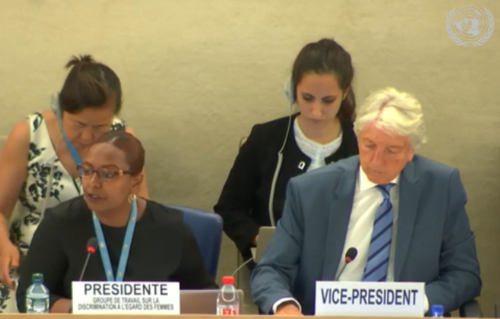
The Working Group begins by noting that women are disproportionately affected by deprivation of liberty due to discrimination they suffer based on prejudices and stereotypes involved in patriarchal contexts which privilege men. According to the report, women’s deprivation of liberty is influenced by three principal gender stereotypes: first, the expected role of women in the private and public sphere; second, women’s sexual or ‘moral’ conduct; and third, the perception of women as weak or needing care.
The report goes on to note the relationship between women, poverty and deprivation of liberty. The Working Group highlights that lack of material resources, opportunity and choices, together with criminalization of poverty, lead to women’s deprivation of liberty. Further, the analysis focuses on the relevance of violence and conflict as determinants of women’s incarceration. Both private violence in the home and in the context of armed conflict, have discriminatory effects on women’s liberty which entails severe human rights violations and jeopardizes women’s right to life and to be free from torture and degrading treatment.
The report concludes with a number of recommendations for States, including the need to eliminate laws that promote and foster stereotyped gender roles, and a wide variety of measures aimed at overcoming women’s poverty.
The Working Group also presented to the Council its reports on its country visits to Honduras (A/HRC/41/33/Add.1) and Poland (A/HRC/41/33/Add.2).
At this session, the Working Group on the issue of human rights and transnational corporations and other business enterprises presented its report on the gender dimensions of the Guiding Principles on Business and Human Rights (A/HRC/41/43).
The report starts by noting that States and business enterprises have often not properly considered the gender dimensions of their efforts to comply with their human rights obligations and responsibilities under the Guiding Principles on Business and Human Rights (UNGPs). Thus, the main purpose of the report is to offer a gender framework applicable to the UNGPs.
The report highlights that women suffer discrimination and violence in a number of ways because of gender stereotypes and patriarchal power structures. Specifically, women are disproportionately affected by: maternity discrimination; sexual harassment and violence in their day to day life; sexual exploitation; austerity measures; climate change; and business activities, among many others. According to the Working Group ‘The forms of discrimination noted above all reflect a failure to integrate a gender perspective in laws, regulations, policies, plans, practices, processes and decisions. The current general business practice of gender-neutral human rights due diligence is a case in point.’
After presenting international human rights standards related to gender equality, the Working Group stresses that the UNGPs contain many provisions regarding gender dimensions and women, which can be categorized in three “gender windows”, that is, the recognition of non-discrimination, the incorporation of a gender perspective in certain contexts, and the consideration of additional standards by business enterprises, such as the CEDAW.
Bearing this analysis in mind, the Working Group presents a gender framework applicable to the UNGPs, which includes a gender-responsive human rights assessment, gender-transformative measures and gender transformative remedies.
According to the report ‘The assessment should be responsive: it should be able to respond to differentiated, intersectional and disproportionate adverse impacts on women’s human rights as well as to discriminatory norms and patriarchal power structures. The consequent measures and remedies should be transformative in that they should be capable of bringing change to patriarchal norms and unequal power relations that underpin discrimination, gender-based violence and gender stereotyping.’
Finally, the Working Group recommends that both States and business enterprises apply the gender framework and Guidelines when considering their human rights obligations.
Resolutions on women’s ESC rights
A resolution on accelerating efforts to eliminate all forms of violence against women and girls was adopted by the Human Rights Council (A/HRC/41/17) at its 41st session. The resolution focused on preventing and responding to violence against women and girls in the world of work.
Recognising that women and girls suffer from violence, discrimination, harassment and intimidation on a large scale in all parts of the world ‘which hinders their full, equal, effective and meaningful participation in economic, social, cultural, civil and political spheres’ the resolution calls on States to take a key role in preventing all forms of discrimination against them by: creating inclusive programmes and policies; enacting legislation; allocating resources; and developing educational strategies to ensure effective and equal participation of women and girls in society without discrimination.
Mexico and Colombia presented their annual resolution on the elimination of all forms of discrimination against women and girls (A/HRC/41/6) which was adopted by consensus.
Recognizing that discrimination suffered by women and girls is closely related to gender stereotypes, patriarchal relations, unequal distribution of power and norms, which in turn precludes the full enjoyment of their civil and political rights and economic, social and cultural rights, the resolution calls upon States to ratify or accede to the CEDAW and to consider reforms and implement legal frameworks and programmes to achieve greater gender equality, including the ‘incorporation of curricula on all women’s and girls’ rights into teacher training courses, including on the prevention of sexual and gender-based violence, and by ensuring universal access to evidence-based comprehensive sexuality education.’
The Human Rights Council also adopted by consensus a resolution (A/HRC/41/14) on equal pay between women and men which was initiated by Iceland.
The resolutions starts by noting that despite the fact that the principle of equal pay for equal work was established decades ago, pay inequality persists across the world due to ‘historical and structural unequal power relations between women and men, poverty and inequalities and disadvantages in access to resources and opportunities’ which affect the capabilities of women and girls to live the life they want in conditions of equality.
The resolution urges States to enact laws, regulations, policies and programs to ensure equal pay for work of equal value and to eliminate the gender pay gap.
Finally, the Council adopted a resolution on the consequences of child, early and forced marriage (A/HRC/41/8) presented by a cross-regional group of countries comprising: Argentina, Canada, Ethiopia, Honduras, Italy, Montenegro, Netherlands, Poland, Sierra Leone, Switzerland, United Kingdom of Great Britain and Northern Ireland, Uruguay and Zambia.
The resolution notes that child, early and forced marriage is a practice on the rise in some contexts and that violates the human rights of thousands of girls and women through ‘domestic and intimate partner violence, marital rape and sexual, physical and psychological violence’ hitting worst the poorest sections of society, especially girls without access to education. The resolution calls on States to take steps to implement policies and plans at all levels to prevent and eliminate child, early and forced marriage.
Annual Discussion on the rights of women
The Council also held its annual discussion on the human rights of women, which involved two panel discussions. The first was on ‘violence against women in the world of work’ and identified the challenges faced by women workers in seeking redress for violence, and considered ways to address these at legal, policy and practical levels. It paid particular attention to sectors where women workers are more at risk and analysed the role of various stakeholders, including trade unions and corporations at the national and international levels. The speakers included the Prime Minister of Iceland, a representative of the International Labour Organisation and a representative of the International Domestic Workers Federation.
The second panel discussion looked at ‘the rights of older women and their economic empowerment’. It heard from a CEDAW Committee member, the UN Population Office and a representative of the Zambian Grandmothers to Grandmothers Campaign. Speakers considered the importance of protecting and promoting the rights of older women and how to eliminate gender-based discrimination throughout their life-course.
Environment, climate change and human rights
Pursuant to resolution A/HRC/RES/38/4, the Council held a panel discussion on women’s rights and climate change. This discussion heard from the President of the Marshal Islands, the High Commissioner for Human Rights, former Irish Prime Minister, Mary Robinson and CEDAW Committee member, Nahla Haidar. The speakers considered good practices and lessons learned in the promotion and protection of the rights of women and girls in the context of the adverse impacts of climate change and the importance of gender-responsive climate action. They also addressed the crucial importance of the consultation and full and equal participation and leadership of women and girls in decision-making, planning and implementation of climate action, for protecting women’s rights and ensuring effective climate action. The webcast of the panel discussion is available HERE.
Also, pursuant to resolution A/HRC/38/4, the High Commissioner for Human Rights submitted an analytical study on gender-responsive climate action for the full and effective enjoyment of the rights of women (A/HRC/41/26).
The report outlines the gendered impacts of climate change and how one’s ability to adapt to climate change is impacted by systemic discrimination, harmful stereotypes and social, economic and political barriers. For instance, ‘limited or inequitable access to financial assets and services, education, land, resources, and decision-making processes, as well as fewer opportunities and less autonomy’ impair women’s adaptive capacity and increase the risk of them experiencing harmful effects of climate change. The report then describes these effects in relation to: food security and access to land; health; sexual and reproductive health and rights; sexual and gender-based violence and discrimination; livelihoods and decent work; cultural impacts; human mobility; and women environmental human rights defenders.
The report then explores the linkages between women’s agency and effective climate action, emphasizing that ‘The full and equal participation and leadership of women in decision-making, planning and implementation as regards climate action is essential to protecting women’s rights and ensuring effective climate action.’ Whilst States have legal human rights obligations to ensure women’s participation and address gender discrimination, evidence also shows that doing so has significant benefits for effective climate action and achievement of sustainable development objectives.
The report promotes a gender-responsive, rights-based approach to climate action to address these gendered impacts of climate change. It sets out the relevant legal and policy instruments in the human rights and climate fields, underlining States’ existing obligations and commitments with respect to gender-responsive and rights-based climate action. The report explains how to integrate these principles and standards into climate action, including climate finance initiatives, and provides illustrative examples of practices.
It concludes with recommendations for gender-responsive approaches to climate action, including:
-
Empower women, as economic and climate actors, workers and employers, to help shape the just transition to a low-carbon economy that benefits all;
-
Ensure that climate funds benefit countries and people most affected by climate change and systematically integrate women’s human rights and gender equality into governance structures, project approval, implementation processes, and public participation mechanisms; and
-
Continue to emphasise the need to respect and fulfil women’s rights as a precondition for effective climate action at the Human Rights Council, the United Nations Framework Convention on Climate Change, and other relevant forums, such as the upcoming UN Secretary General’s Climate Action Summit and the high-level political forum on sustainable development.
Resolution
The Council’s annual resolution on climate change and human rights was also adopted at this session by consensus (A/HRC/RES/41/21). Presented by Bangladesh, Vietnam and the Philippines, the resolution resembles quite closely the text of the resolution from 2018, again expressing concern that: ‘climate change has contributed and continues to contribute to the increased frequency and intensity of both sudden-onset natural disasters and slow-onset events, and that these events have adverse effects on the full enjoyment of all human rights’.
The resolution identifies a new theme for the Council’s work on human rights and climate change: the rights of persons with disabilities in the context of climate change. It calls on States to ‘adopt a comprehensive, integrated, gender-responsive and disability-inclusive approach to climate change adaptation and mitigation policies’. It also requests the OHCHR to conduct an analytical study on the promotion and protection of the rights of persons with disabilities in the context of climate change and mandates a further panel discussion at the 44th Council session, on that theme, which will have international sign interpretation and captioning.
Other initiatives of interest
-
Côte d'Ivoire, Egypt, El Salvador, France, Greece, Italy, Morocco, Philippines, Portugal, Republic of Moldova and Tunisia presented a resolution on youth and human rights, which was adopted by consensus (A/HRC/RES/41/13). The resolution requests the OHCHR to organize and convene, during the first semester of 2020, a full-day intersessional seminar focused on the challenges and opportunities of young people in the field of human rights, with the participation and involvement of youth-led and youth- focused organizations, and to submit to the Human Rights Council a report on the seminar prior to its forty-sixth session.
-
A resolution renewing the mandate of the Independent Expert on protection against violence and discrimination based on sexual orientation and gender identity was presented at this session by Argentina, Brazil, Chile, Colombia, Costa Rica, Mexico, Uruguay and was adopted after a vote (27 for, 12 against and 7 abstentions). The Independent Expert, Victor Madrigal-Borloz, also presented his report at this session (A/HRC/41/45). The report looked at data collection and management as a means to create heightened awareness on violence and discrimination based on sexual orientation and gender identity. The Independent Expert also outlines the risks associated with data collection, use and storage and identifies key human rights safeguards in that regard.
-
The negative impact of corruption on the enjoyment of human rights was addressed in a resolution presented to the Council by Argentina, Austria, Brazil, Ethiopia, Indonesia, Morocco, Poland and the UK (A/HRC/RES/41/9).
-
On the initiative of the Republic of Korea, Austria, Brazil, Denmark, Morocco and Singapore, the Council adopted by consensus a resolution on ‘new and emerging digital technologies and human rights’ (A/HRC/RES/41/11). The resolution requests the Advisory Committee to prepare a report on ‘the impacts, opportunities and challenges of new and emerging digital technologies with regard to the promotion and protection of human rights, including mapping of relevant existing initiatives by the United Nations and recommendations on how human rights opportunities, challenges and gaps arising from new and emerging digital technologies could be addressed by the Human Rights Council’. It also decides to hold a panel discussion on this topic at its 44th session.
-
The Human Rights Council Advisory Committee presented its study (A/HRC/41/50) on the contribution of development to the enjoyment of all human rights, mandated by Council resolution A/HRC/35/21.
-
China presented its regular and controversial resolution on ‘the contribution of development to the enjoyment of all human rights’ (A/HRC/41/19) . The resolution was adopted by vote (33 for, 13 against) with all Council members from the Western and Other group voting against. Unfortunately the resolution, like previous years, is thin on human rights and thick on economic growth and development. States reaffirmed ‘the significant contribution of development to the enjoyment of all human rights by all’ but failed to recognize the human rights abuses occasioned by development projects and processes in many countries. Many paragraphs of the resolution do not mention human rights. For example operational paragraph 6 states: ‘Emphasizes the importance for people of each State to benefit from sustained, inclusive and sustainable economic growth’. The resolution asks the OHCHR to organize a 1 day inter-sessional seminar on ‘the contribution of development to the enjoyment of all human rights’ which will identify challenges and gaps and share good practices and experiences. The Council requested a summary report of the seminar for presentation at the 47th Council session.
-
The High Commissioner for Human Rights presented to the Council her report on the situation of human rights in the Bolivarian Republic of Venezuela (A/HRC/41/18) addressing the alarming violations of both civil and political rights and economic and social rights since 2018.
Regarding the violation of economic and social rights, the report notes that Venezuelans are facing serious, inter-related social rights violations, especially in the field of the right to food and health. Acts carried out by the Government such as ‘Misallocation of resources, corruption, lack of maintenance of public infrastructure, and severe under investment has resulted in violations of the right to an adequate standard of living’.
On the right to food, the High Commissioner notes that the State is not devoting the maximum available resources to ensure that Venezuelans are free from hunger, nor is it seeking international assistance and cooperation to achieve this purpose. Both signify a manifest violation of the ICESCR. Further, the report points out that ‘hyperinflation and economic contraction, economic and social policies adopted over the past decade have undermined food production and distribution systems, increasing the number of people that rely on food assistance programmes.’On the right to health, the Office of the High Commissioner documented the lack of medicines, medical equipment, skilled birth personal, and contraceptives which in turn adversely affect: the right to education of girls who must abandon school because of pregnancy; increasing risk of contracting HIV; and increasing maternal mortality. The deterioration of the health system is exemplified by the fact that ‘1,557 people died due to lack of supplies in hospitals’ and that ‘20 percent of maternal deaths reportedly [are] linked to unsafe abortions.’
The High Commissioner stressed that ‘Violations of the right to health resulted from the Government’s failure to fulfil its core obligations, which are non-derogable, even for economic reasons. Violations of core obligations were linked to the widespread lack of availability of, and access to, essential medicines and treatment, the deterioration of conditions in hospitals, clinics, and maternity clinics, insufficient provision of underlying determinants of health, including water and adequate nutrition (…).’
Next Session
The next session of the Human Rights Council (42nd session) will be held from 09 September 2019 to 27 September 2019.
Thank you to Vicente Silva, intern with the Global Initiative for Economic, Social and Cultural Rights, for valuable his work on this Update.
Related Articles
SITEMAP
TAKE ACTION
NEWSLETTER